


Thailand’s investment promotion regime is entering a new phase. For decades, the country’s industrial policy under the Thailand Board of Investment relied heavily on corporate income tax exemptions, import duty privileges, and non-tax incentives to attract foreign direct investment. However, the launch of the THB 5 billion Competitiveness Enhancement Fund marks a structural policy shift: Thailand is now moving beyond passive investment attraction toward direct state-supported capability building.
The newly introduced financial assistance mechanism is designed to address one of the country’s most urgent economic challenges — the widening gap between industrial transformation and workforce readiness. The fund focuses on advanced curriculum development, high-level workforce upskilling, and technological upgrading in strategic sectors such as artificial intelligence (AI), robotics, biotechnology, advanced agriculture, electronics, medical devices, and digital industries.
Unlike traditional BOI incentives that reduce operational costs after investment occurs, this initiative directly subsidizes the creation of industrial capabilities before competitiveness is lost. The policy reflects Thailand’s recognition that future investment competition will increasingly depend on talent ecosystems, innovation infrastructure, and supply-chain sophistication rather than tax privileges alone.
From Incentive-Based Promotion to Capability-Based Industrial Policy
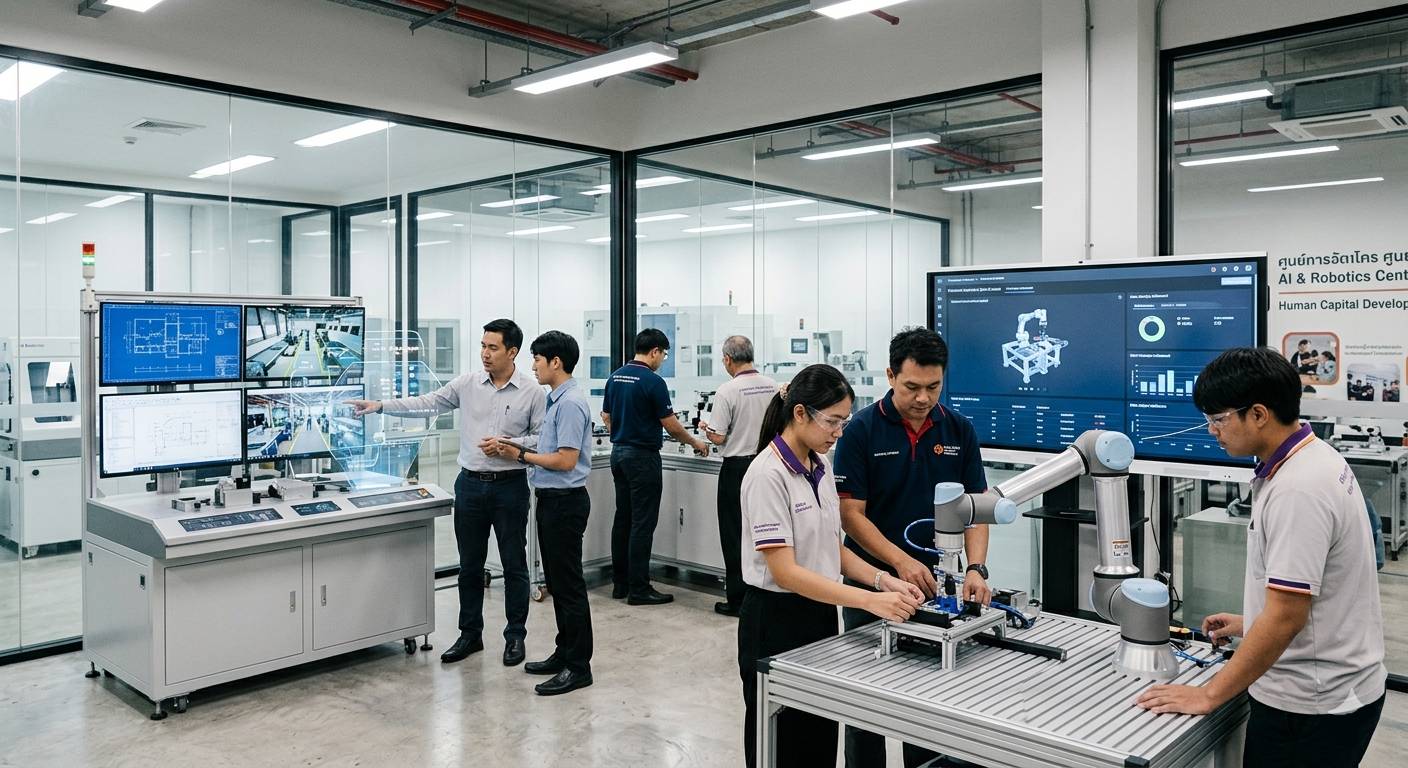
The significance of the THB 5 billion fund lies not only in its size, but also in its policy philosophy. Historically, Thailand’s BOI framework focused on attracting capital-intensive manufacturing through fiscal incentives. While that model successfully established Thailand as a regional manufacturing hub for automotive, electronics, and petrochemicals industries, the emerging global economy demands a different approach.
Today, multinational corporations evaluating regional expansion prioritize several factors beyond tax savings, including:
- Availability of STEM talent
- AI and digital engineering capabilities
- Research commercialization ecosystems
- Smart manufacturing readiness
- Local supplier sophistication
- ESG and green transition preparedness
Thailand’s government appears to recognize that industrial competitiveness can no longer depend solely on low production costs or tax holidays. Instead, long-term competitiveness requires direct investment into human capital and domestic technological capacity.
According to official BOI statements, the fund will support curriculum design, evaluation systems, management structures, and industrial training programs aligned with investor demand in high-technology sectors. The initiative aims to upskill at least 100,000 individuals, including approximately 30,000 university students and 70,000 workers.
This represents a transition from “investment promotion” toward “industrial ecosystem engineering” — a model increasingly adopted by advanced economies competing in semiconductor, AI, biotechnology, and clean technology industries.
Solving Thailand’s Structural STEM Talent Gap
One of the core objectives behind the fund is to address Thailand’s persistent shortage of advanced technical talent. Although Thailand has maintained a strong manufacturing base for decades, the country continues to face structural limitations in deep-tech labor development, particularly in areas such as:
- AI engineering
- Robotics integration
- Semiconductor design
- Biotechnology research
- Industrial automation
- Data science and cloud infrastructure
This challenge has become increasingly visible as global technology companies expand regional operations across Southeast Asia. Thailand has recently experienced strong investment momentum in digital infrastructure, cloud services, data centers, EV manufacturing, and smart electronics.
However, attracting high-value investment without sufficient local talent creates long-term sustainability risks. Companies may establish facilities in Thailand, but high-level engineering, R&D, and innovation functions could remain concentrated elsewhere unless domestic capabilities improve.
The BOI’s direct grant approach attempts to bridge this gap by funding industry-linked education and practical workforce transformation rather than relying solely on traditional academic systems. Importantly, the initiative appears designed to encourage collaboration among universities, private sector operators, technology firms, and industrial clusters.
This approach aligns with broader global trends where governments are increasingly subsidizing workforce transformation directly. Similar industrial policies have emerged in countries such as Singapore, South Korea, Germany, and the United States, particularly in strategic sectors tied to technological sovereignty and supply-chain security.
Strengthening Domestic Supply Chains and Thai Enterprises
Another major component of the fund focuses on upgrading Thai enterprises and domestic supply chains to international standards. This aspect may prove even more strategically important than the workforce development program itself.
Thailand’s manufacturing sector has historically relied heavily on foreign-led production ecosystems. While foreign investment has generated employment and exports, local supplier upgrading has often lagged behind multinational production expansion. As a result, many Thai SMEs remain positioned in lower-value segments of industrial supply chains.
The new support measures aim to improve production efficiency, technological adoption, research capability, and international compliance standards among Thai businesses. According to policy discussions surrounding the program, certain support schemes may subsidize portions of technology upgrading costs, R&D investment, and industrial modernization initiatives.
This policy direction is especially relevant as global supply chains undergo major restructuring driven by geopolitical tensions, regional diversification strategies, and ESG requirements. International manufacturers increasingly seek resilient local supplier networks capable of supporting advanced production standards.
For Thailand, strengthening domestic supply-chain capabilities serves multiple strategic goals:
- Increasing local value-added contribution
- Reducing overdependence on imported intermediate goods
- Supporting industrial resilience
- Expanding technology transfer
- Improving export competitiveness
- Enhancing long-term investor confidence
In practical terms, the success of Thailand’s next-generation industrial strategy may depend less on the volume of incoming investment and more on how deeply that investment integrates with local technological and supplier ecosystems.
Implications for Thailand’s Future Investment Landscape
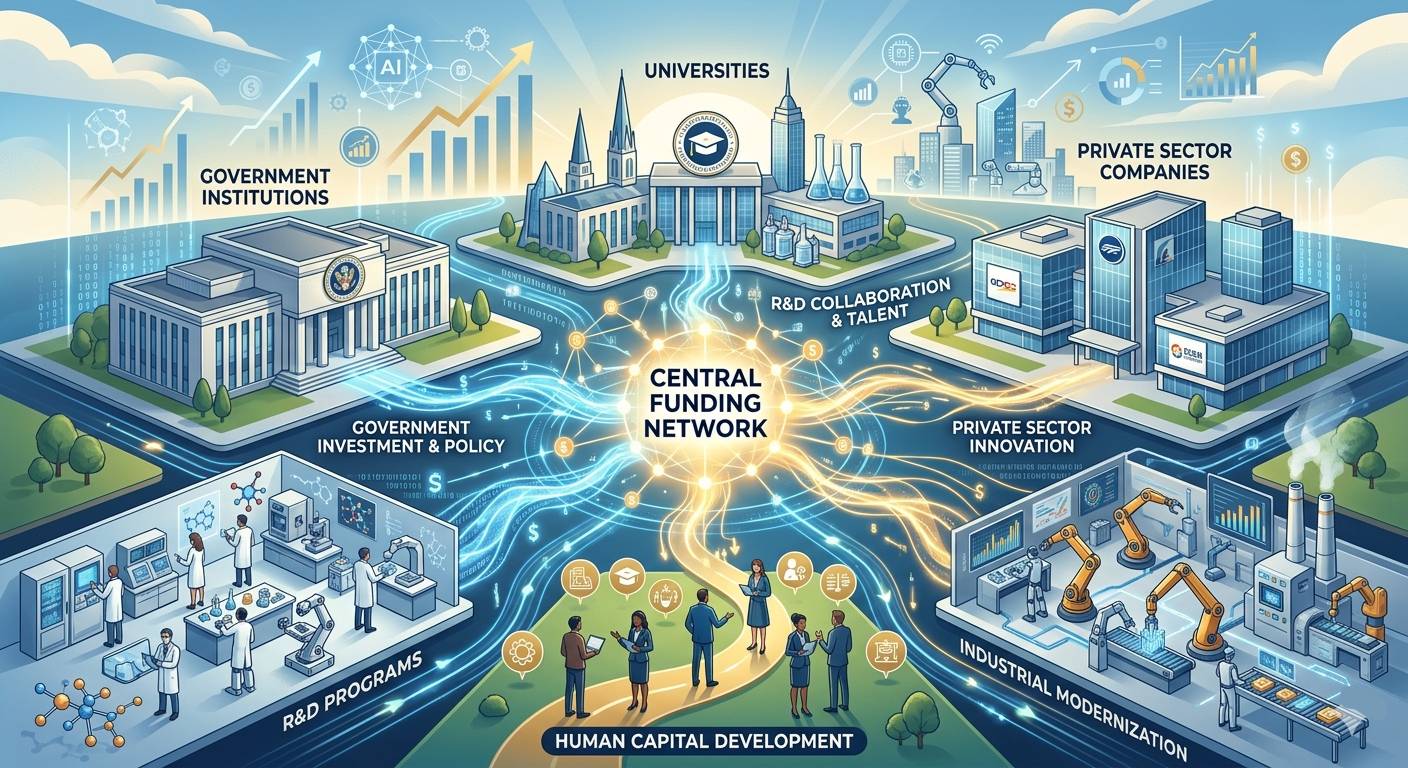
The launch of the THB 5 billion fund signals that Thailand is repositioning itself within the global competition for advanced industries. The policy complements broader BOI strategies aimed at promoting the “new economy,” including smart electronics, digital infrastructure, bioeconomy industries, EV supply chains, and sustainable manufacturing.
More importantly, the initiative demonstrates increasing government willingness to intervene directly in capability formation rather than depending entirely on market-driven industrial development.
For foreign investors, the new framework may create stronger long-term confidence in Thailand’s industrial transition strategy. Companies entering Thailand in sectors such as AI, automation, biotech, and advanced manufacturing typically require more than tax incentives; they require scalable talent pipelines and technologically capable supplier networks.
For Thai businesses, the initiative may provide a rare opportunity to accelerate modernization and participate more meaningfully in next-generation supply chains. However, execution will ultimately determine the program’s effectiveness. The key challenges will likely include governance transparency, allocation efficiency, institutional coordination, and ensuring that training programs produce commercially relevant outcomes rather than administrative targets.
Nevertheless, the policy marks one of the most significant developments in Thailand’s industrial promotion framework in recent years. It reflects an evolving understanding that in the global competition for high-value investment, the decisive factor is no longer simply cost competitiveness — it is national capability competitiveness.
