


Thailand’s tax regime for personal income has been evolving rapidly in recent years, especially regarding income earned overseas. Tax residents now need to pay careful attention to their worldwide income and think strategically about how to avoid double taxation and offset foreign taxes when filing a Thai Personal Income Tax Return (usually via forms P.N.D.90 or P.N.D.91).
Let’s explore what this means in practice, who it applies to, and how you can minimize your overall tax burden.
Who Is Considered a Thai Tax Resident?
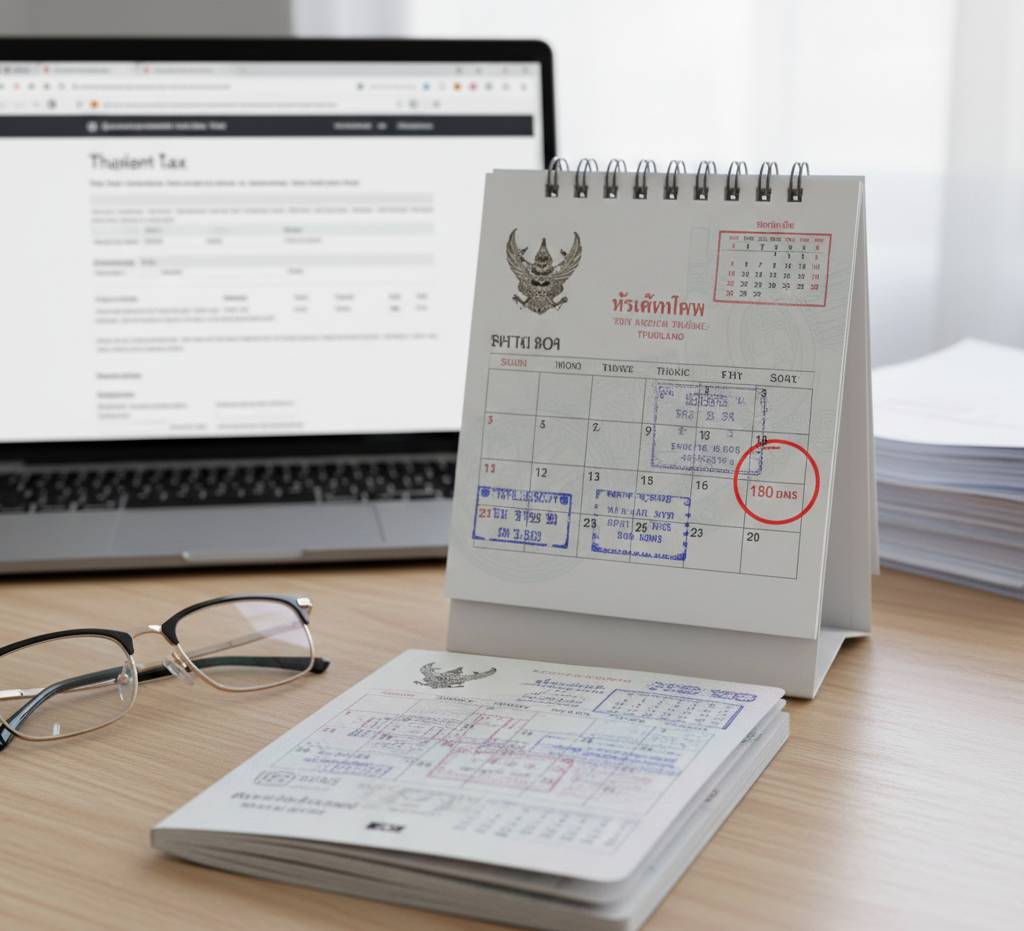
Under Thai law, any individual who stays in Thailand for 180 days or more during a calendar year is generally treated as a Thai tax resident for that year. Tax residents are liable for Thai personal income tax (PIT) on both:
- Thai-sourced income, and<
- Foreign-sourced income if that income is brought into Thailand (remitted).
Non-residents are taxed only on income sourced within Thailand.
How Foreign Income Is Taxed in Thailand
Recent Rule Change (Effective Jan 1, 2024)
Before 2024, Thailand only taxed foreign income if it was remitted in the same calendar year it was earned — a loophole many residents used to defer tax. That loophole was closed by new Revenue Department guidelines effective January 1, 2024:
Now, if you are a Thai tax resident, foreign income earned abroad must be declared and is taxable when it is remitted to Thailand, regardless of the year it was earned.
Example:You earned income in 2022 from consulting abroad but brought those funds into Thailand in 2025. Under the new interpretation, that income would be subject to Thai PIT in 2025.
However:
Foreign income earned before 2024 (prior to the rule change) generally remains exempt from Thai tax even if remitted later, provided you can document when it was earned.
Avoiding Double Taxation — The Key “Foreign Tax Offset” Tools

1. Double Taxation Agreements (DTAs) — Main Relief Mechanism
Thailand has tax treaties (DTAs) with over 60 countries. Under most treaties, if you pay tax on your income in the source country (e.g., the U.S., UK, Singapore, Germany), you may claim a Foreign Tax Credit (FTC) against your Thai tax liability on the same income.
How it works:
- Declare the foreign income on your Thai tax return.
- Report the tax you paid abroad.
- Thailand credits (offsets) that foreign tax up to the amount of Thai tax due on that same income.
This means: You are not taxed twice on the same economic income. If foreign tax is higher than Thai tax, you usually don’t get a refund — just a credit up to Thailand’s tax amount.
Important:Credits for foreign tax can only be used if permitted under a DTA; there’s no unilateral foreign tax credit in Thai domestic law outside a DTA.
2. Documentation Is Critical
To claim a foreign tax credit in Thailand, you’ll generally need:
- A Tax Payment Certificate or similar official evidence from the foreign tax authority showing tax paid abroad,
- Proof that you are a tax resident where the tax was paid, and
- Translation into English or Thai if necessary.
Tip: Keep detailed records — missing documentation is one of the most common reasons a credit claim is disallowed.
3. Tax Planning Around Timing of Remittances
Because Thailand taxes foreign income when it enters the country, some taxpayers explore:
- Holding foreign income offshore (e.g., in foreign bank accounts) to delay Thai tax liability,
- Planning when to remit funds into Thailand to align with deductible allowances or lower tax years, or
- Relocating for parts of the year to avoid 180-day residency status.
Warning: Deliberately dodging tax by structuring residency or remittances needs careful legal and ethical consideration. Always consult a qualified tax advisor.
Example: How Foreign Tax Credits Work in Practice
Scenario:You’re a Thai tax resident in 2025 and earned a foreign salary of $50,000 that was taxed at 20% (USD 10,000) abroad.
Thai tax (before credit):
- Total taxable income ≈ $50,000 + Thai income
- Thai tax on $50,000 might be, say, 15% ≈ $7,500.
Foreign Tax Credit:You can apply your $10,000 foreign tax credit up to Thailand’s tax amount ($7,500).
Result:Your Thai tax bill on that income becomes $0 — but the extra $2,500 foreign tax cannot be refunded by Thailand. The credit simply prevents double taxation up to the Thai tax owed.
Strategy Tips Before You File
Know your residency status (180-day rule). Maintain clear documentation of foreign income and taxes paid. Check if your country has a DTA with Thailand. Understand Thai deductions and allowances (personal, spouse, children, insurance, etc.), which can reduce your total taxable income. When in doubt, engage a Thai tax professional — foreign income and cross-border taxes can get complex.
Conclusion
Offsetting overseas taxes when filing your Thai personal income tax return is possible — but it hinges on understanding:
your residency status, when your foreign income is taxable in Thailand, and how Double Tax Agreements allow you to use foreign tax credits to reduce your Thai tax bill.
With careful planning and proper documentation, you can file correctly, minimize double taxation, and stay compliant with Thai Revenue Department rules.
