


In today’s globalized economy, businesses are increasingly generating revenue beyond their home country. While expanding internationally offers opportunities for growth, it also introduces complex tax obligations. One of the most critical considerations is how profits earned abroad are treated under corporate income tax (CIT) rules. Understanding this can help businesses remain compliant, optimize tax planning, and avoid unexpected liabilities.
Understanding Foreign-Sourced Income
Foreign-sourced income refers to profits, interest, royalties, or other income earned outside the home country. Many countries, including Thailand, operate under a worldwide taxation system, meaning that a resident company is subject to corporate income tax on global profits, not just domestic earnings.
Key points to note:
- Foreign-sourced income may include revenue from sales, services, or investments overseas.
- Tax treatment often depends on whether the income is remitted to the home country.
Repatriation and Timing
One of the most important aspects of foreign profits is repatriation — transferring profits back to the home country. In some jurisdictions, including Thailand:
- Foreign profits may only be taxed when brought into the country.
- Deferring repatriation may delay tax liabilities, but companies must consider local withholding taxes and anti-avoidance rules.
This makes timing of remittance a critical factor in corporate tax planning.
Double Taxation Agreements (DTAs)
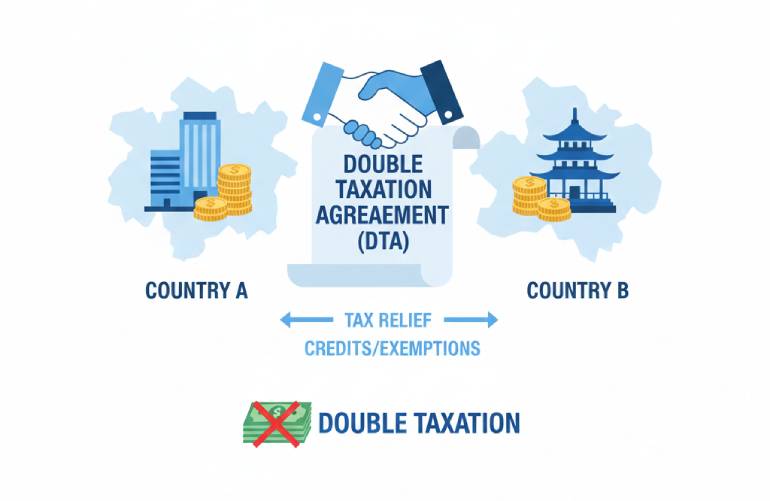
Paying taxes both abroad and at home can create double taxation. To mitigate this, many countries rely on Double Taxation Agreements (DTAs) with other nations. These agreements often provide:
- Tax credits for foreign taxes paid, reducing domestic tax liability.
- Reduced withholding tax rates on interest, royalties, or dividends.
- Exemptions or special rules for certain types of income.
For example, under Thailand’s DTAs, withholding tax rates for royalties or interest can be reduced to 5% or 15%, depending on the treaty with the foreign country.
Documentation and Compliance
Proper documentation is critical when dealing with foreign-sourced income:
- Keep detailed records of foreign income, taxes paid abroad, and the source country.
- Obtain tax residency certificates from foreign recipients to apply treaty benefits.
- Ensure compliance with local transfer pricing regulations for transactions between related companies.
Failure to comply can result in penalties, interest, or disallowance of tax treaty benefits.
Strategic Considerations for Businesses
To optimize global tax positions, companies should consider:
- Evaluating tax rates abroad – Understand local corporate tax and withholding rates in countries where business is conducted.
- Using tax treaties – Apply DTA benefits wherever applicable to reduce withholding tax.
- Planning repatriation timing – Strategically manage when profits are remitted to minimize tax exposure.
- Structuring operations – Consider using foreign branches or subsidiaries to benefit from local incentives while remaining compliant.
Conclusion
Profits earned abroad present both opportunities and challenges for businesses. Navigating corporate income tax on foreign-sourced income requires careful planning, awareness of treaties, and strict compliance with both domestic and foreign regulations. By understanding how foreign profits are taxed and implementing a strategic approach, businesses can minimize their tax burden while staying fully compliant.
Key Takeaways:
- Foreign-sourced income may be taxable in the home country.
- DTAs can reduce or eliminate double taxation.
- Documentation and compliance are essential for claiming treaty benefits.
- Strategic repatriation and planning can optimize global tax positions.
