In Thai M&A transactions, regulatory risk does not always arise from what a company does. In many cases, the more significant issue is who controls it. This distinction is particularly important under Thailand's Foreign Business Act B.E. 2542 (1999) (“FBA”), where a change in ownership can fundamentally alter a company's legal status and ability to conduct business.


Accounting & Legal in Thailand
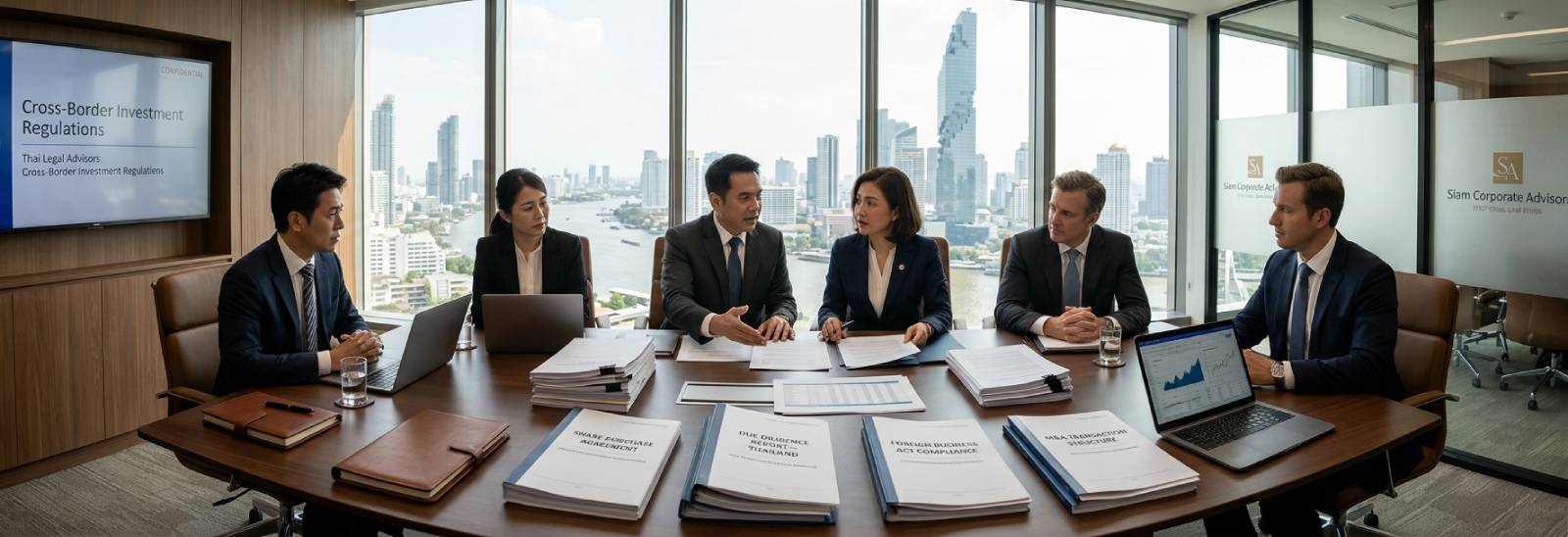

As Thailand continues to position itself as a regional investment and commercial hub, businesses are increasingly reassessing how contractual disputes should be managed in an era of globalized commerce. For many years, parties entering into commercial agreements relied on court litigation as the default dispute resolution mechanism. However, modern cross-border transactions involving multinational corporations, foreign investors, technology providers, lenders, and regional supply chains have exposed the limitations of traditional litigation in resolving complex international disputes.

Thailand's residential leasing market has undergone one of its most significant regulatory transformations in recent years. The Notification of the Contract Committee Re: The Stipulation of Residential Property Leasing as a Contract-Controlled Business B.E. 2568 (2025), issued under the Consumer Protection Act, substantially expands tenant protections and imposes stricter compliance obligations on residential property operators. The new framework became effective in September 2025 and replaces the previous 2019 regime. Notably, the scope of regulation has been broadened to capture landlords and operators leasing three or more residential units, significantly increasing the number of businesses subject to consumer protection oversight.

The digital transformation of commercial contracting has fundamentally changed how businesses execute agreements. Yet many organizations continue to rely on outdated execution practices, including scanned handwritten signatures, signature images pasted into PDF documents, and informal email approvals. While these methods may appear operationally efficient, they often create significant evidentiary vulnerabilities when a contract is later challenged before a court, arbitral tribunal, regulator, or counterparty.

For many years, multinational corporations entering the Thai market routinely imported global contract templates containing extensive limitation of liability provisions, broad indemnities, and comprehensive hold-harmless protections. These clauses were often designed to shift substantial commercial risk away from the drafting party and onto its counterparty. While such approaches may remain effective in certain jurisdictions, their enforceability under Thai law has become increasingly uncertain.

For years, exclusive supply arrangements, exclusive distribution rights, tying arrangements, and bundled commercial offerings occupied a legally sensitive area under Thailand's Trade Competition Act B.E. 2560 (2017). While these contractual mechanisms often serve legitimate commercial objectives—such as protecting investments, ensuring supply-chain stability, or maintaining brand standards—they may also attract scrutiny where they restrict market access, foreclose competitors, or create unfair barriers to trade.
