The taxation of foreign-sourced income in Thailand has entered a fundamentally different era. Since the Revenue Department's landmark reinterpretation of Section 41 of the Revenue Code, foreign income earned by Thai tax residents and subsequently brought into Thailand has become subject to Thai personal income tax. Simultaneously, Thailand's implementation of the Common Reporting Standard (CRS) has significantly strengthened the government's ability to obtain information regarding offshore financial accounts held by Thai tax residents.


Accounting & Legal in Thailand


Financial due diligence in Thailand has undergone a profound transformation in 2026. Historically, acquisition teams focused primarily on reviewing audited financial statements, testing account balances, and confirming compliance with basic accounting standards. Today, however, investors, lenders, and legal advisors are increasingly concerned with the quality and sustainability of reported earnings rather than merely their accuracy.
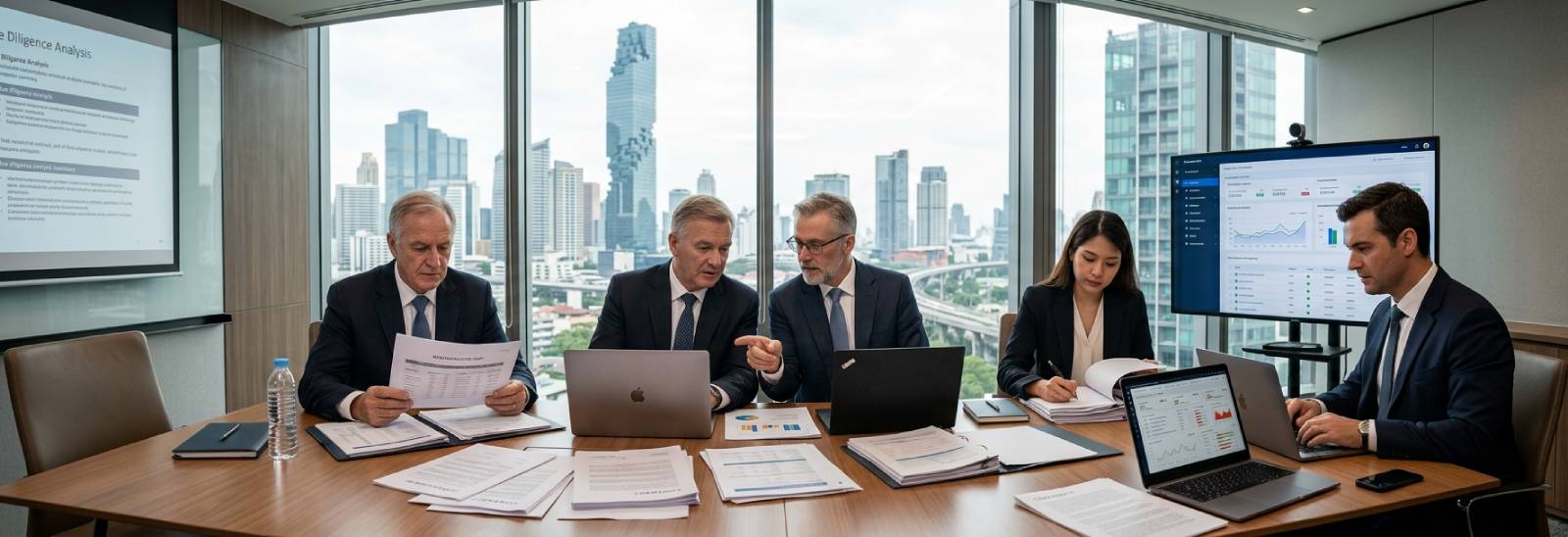
For decades, due diligence (DD) was primarily a labor-intensive process involving teams of lawyers, accountants, and consultants manually reviewing contracts, financial records, corporate filings, and operational documents. In complex transactions, particularly cross-border mergers and acquisitions, this process often consumed months of professional time while still leaving room for material risks to remain undiscovered.

Thailand's M&A environment entered a new regulatory era in 2026. Historically, due diligence teams assessed ownership structures through a review of shareholder registers, corporate filings, constitutional documents, and beneficial ownership declarations. While these procedures remain important, they no longer provide sufficient assurance regarding compliance with Thailand's foreign ownership restrictions.

Thailand's real estate industry is undergoing one of its most significant regulatory transformations in decades. Driven by sustainability objectives, digital tax administration, and increased transparency requirements, the traditional methods of property development, ownership structuring, and transaction planning are being fundamentally reshaped.

Thailand's capital markets are undergoing a significant transformation as blockchain technology introduces a new model for real estate investment. Through tokenization, ownership interests in commercial properties can be divided into digital units and offered to investors in fractional amounts, dramatically lowering traditional barriers to entry.
