


Thailand’s Board of Investment (BOI) framework in 2026 represents more than a policy adjustment — it is a structural transformation of how the Thai government evaluates, supervises, and incentivizes foreign investment. For multinational corporations, regional headquarters, advanced manufacturers, and technology-driven enterprises, the old BOI strategy centered purely on tax holidays is rapidly being replaced by a compliance-driven and performance-based investment ecosystem.
The Thai government is no longer focused solely on attracting capital inflows. Instead, it is prioritizing strategic industries, technology transfer, local economic contribution, and transparent corporate governance. Companies entering Thailand under the assumption that traditional BOI privileges alone will guarantee long-term advantages may face unexpected regulatory and operational risks.
From Tax Holidays to Global Minimum Tax Compliance
For many years, Thailand’s BOI incentives were heavily associated with Corporate Income Tax (CIT) exemptions lasting up to 13 years. While those incentives remain available in certain sectors, the international tax environment has fundamentally changed due to the OECD’s Global Minimum Tax (GMT) framework.
In response, Thailand is redesigning its investment promotion model to ensure compliance with the 15% global effective tax rate while preserving competitiveness for high-value investors. This shift is particularly significant for multinational enterprises operating under Pillar Two rules, where excessive tax exemptions may no longer generate the intended financial advantages.
As a result, Thailand is gradually transitioning toward refundable tax credits, targeted subsidies, and direct strategic support mechanisms rather than relying exclusively on extended tax holidays. This reflects a more sophisticated approach aligned with global tax standards while still positioning Thailand as a regional investment hub.
For foreign investors, this means future BOI planning must involve not only local tax analysis, but also global group tax structuring, transfer pricing considerations, and cross-border compliance assessments.
Compliance Has Become a Core Investment Condition
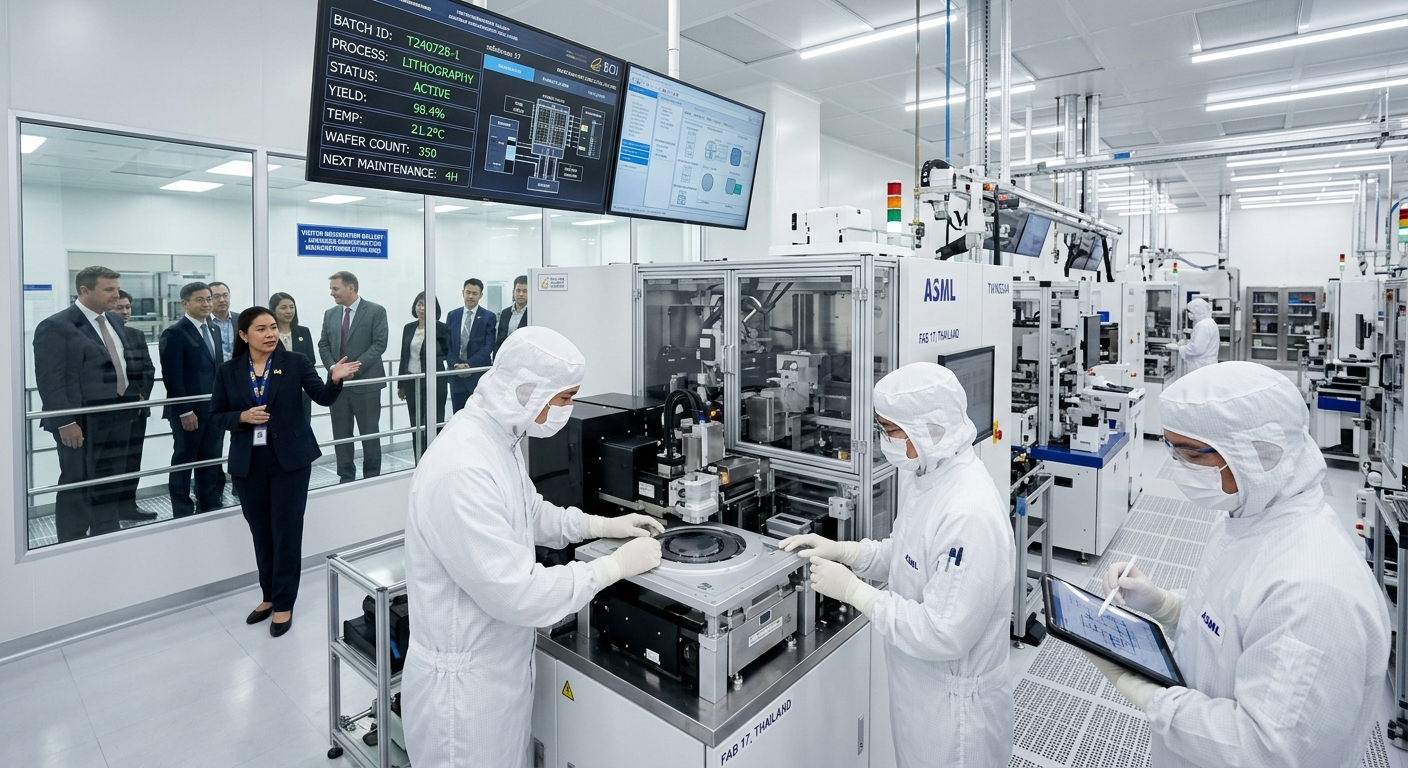
One of the most important shifts in 2026 is the BOI’s stronger emphasis on active compliance monitoring. Historically, some BOI-promoted companies treated reporting obligations as administrative formalities. Under the new framework, that approach carries substantial risk.
The BOI has introduced stricter quarterly reporting requirements supported by integrated digital monitoring systems. Companies that repeatedly fail to comply with operational conditions, reporting timelines, or investment milestones may face severe penalties under the so-called “Two-Strike Revocation Rule,” potentially resulting in suspension or cancellation of privileges.
This marks a major transition from a relationship-based administrative model toward a data-driven regulatory system. The government is increasingly using real-time digital integration between agencies to monitor investment activity, foreign employment structures, production performance, and financial reporting consistency.
At the same time, the Department of Business Development (DBD) has intensified scrutiny on nominee structures and foreign shareholding arrangements through enhanced “Source of Funds” verification procedures under DBD Order 1/2569. Foreign investors are now expected to demonstrate genuine capital sources, transparent ownership structures, and legitimate commercial substance.
For international businesses, corporate governance and documentation standards in Thailand are now approaching levels commonly seen in more mature regulatory jurisdictions.
The Rise of Strategic Incentives Beyond Tax Relief
Thailand’s 2026 investment policy also reflects a broader economic ambition: attracting industries that directly strengthen national competitiveness. Instead of granting blanket privileges across broad sectors, the BOI is increasingly channeling support toward industries considered strategically critical to the country’s long-term industrial roadmap.
This includes advanced semiconductor manufacturing, AI-enabled industries, electric vehicle ecosystems, biotechnology, clean energy infrastructure, aerospace technology, and smart logistics systems.
One of the most notable developments is the establishment of the THB 5 billion Competitiveness Enhancement Fund, which allows the government to provide direct financial support to strategically important projects. This is a substantial evolution from the traditional BOI framework, where incentives were primarily limited to tax and import duty exemptions.
The introduction of direct grants indicates that Thailand is competing more aggressively for high-value foreign investment projects, particularly those involving advanced technologies, research capabilities, or supply chain localization.
For investors, the practical implication is clear: future BOI success will increasingly depend on whether a project aligns with Thailand’s national industrial strategy rather than simply meeting minimum investment thresholds.
Immigration and Workforce Rules Enter the Digital Era

Another major advancement is the integration of immigration and labor systems through the BOI Single Window platform. Physical work permits are gradually being replaced by Digital Work Permits (D-WP), which are connected directly to immigration databases and mobile application systems.
This integration significantly reduces administrative burdens for BOI-promoted companies employing foreign specialists, executives, and technical experts. More importantly, it strengthens Thailand’s broader strategy to attract global talent through Long-Term Resident (LTR) visas and Smart Visa programs.
The practical impact for foreign businesses is substantial. BOI-promoted companies are increasingly exempt from the traditional “four Thai employees per one foreign employee” ratio requirement, particularly in strategic industries requiring specialized expertise.
This policy direction demonstrates that Thailand is attempting to balance two objectives simultaneously: maintaining local workforce development while remaining globally competitive in attracting high-skilled foreign talent.
For companies operating regional headquarters, R&D centers, or advanced manufacturing operations, this modernization could materially improve workforce mobility and operational flexibility.
Thailand’s Investment Climate Is Becoming More Sophisticated
The overall message behind the 2026 BOI transformation is unmistakable. Thailand is moving away from a broad-based incentive economy toward a highly selective, compliance-intensive, and strategically aligned investment environment.
Companies that view BOI promotion purely as a tax-saving mechanism may struggle under the new system. However, businesses that prioritize transparency, advanced technology, long-term industrial contribution, and strong governance standards are likely to find Thailand increasingly attractive as a regional base.
For serious investors, the key question is no longer whether Thailand offers incentives. The real question is whether the business model aligns with Thailand’s evolving economic priorities in an era defined by digital regulation, geopolitical supply chain shifts, and global tax reform.
