


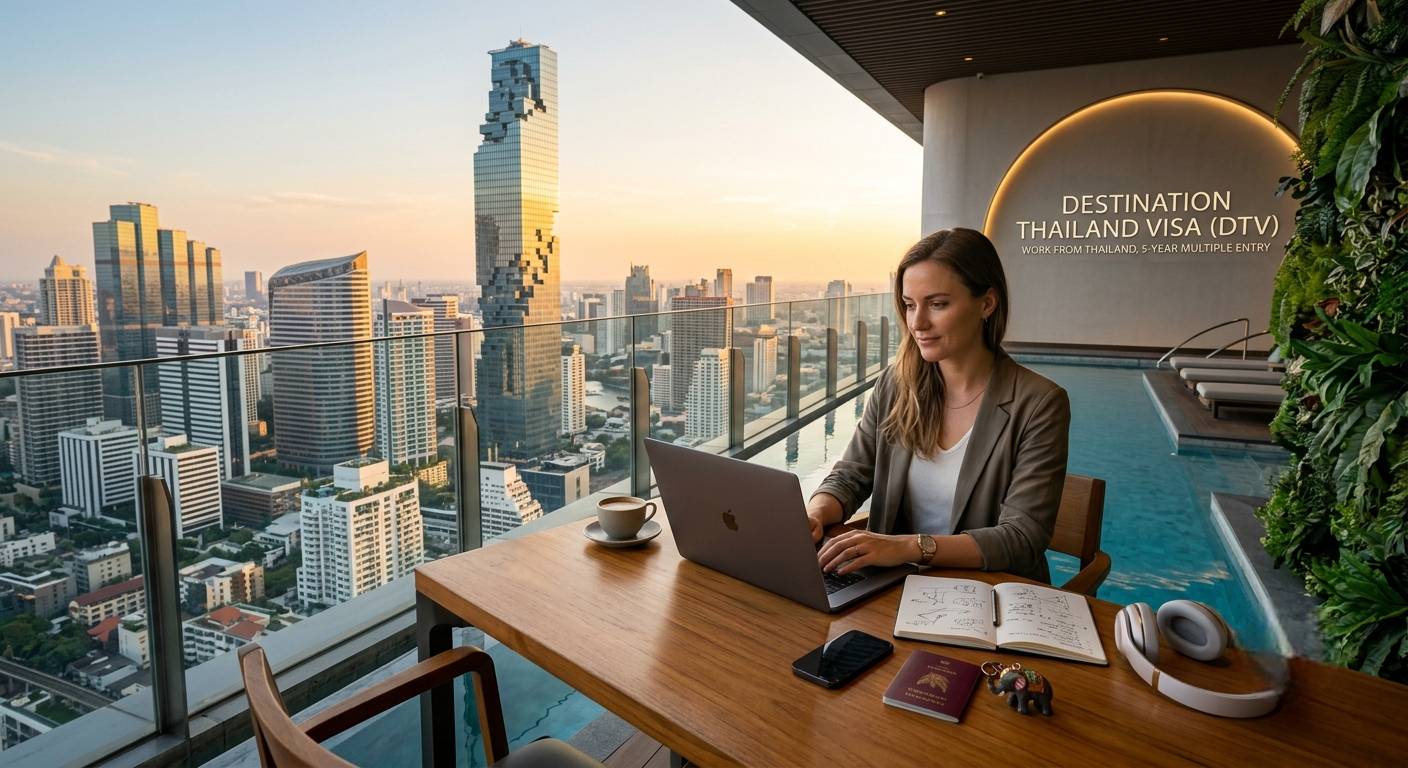
As Thailand continues positioning itself as Asia’s premier destination for remote professionals, entrepreneurs, and location-independent workers, the Destination Thailand Visa (DTV) has matured from an experimental long-stay program into a core pillar of the country's international talent strategy.
Introduced to attract digital nomads, freelancers, remote employees, and participants in Thailand’s cultural and wellness industries, the DTV offers one of the region’s most attractive residency frameworks: a five-year multiple-entry visa with permission to remain in Thailand for up to 180 days per entry, with extension options available under immigration regulations. However, as application volumes have surged, Thai embassies and consulates worldwide have significantly tightened their review standards in 2026.
The result is a visa category that remains highly attractive, but no longer accommodates weak documentation or speculative applications.
The Shift from Accessibility to Compliance-Based Assessment
Thai diplomatic missions are now conducting far more rigorous examinations of financial capacity, source of income, and the legitimacy of an applicant's intended activities. The cornerstone requirement remains proof of at least 500,000 THB in available funds, but embassies increasingly focus on the stability and history of those funds rather than simply the closing balance shown on a bank statement.
Many missions now expect applicants to demonstrate that the required funds have been maintained consistently over several months prior to submission, reducing the possibility of temporary deposits or borrowed funds being used solely to satisfy the requirement. Financial evidence that lacks continuity, contains unexplained large transfers, or originates from difficult-to-verify sources frequently triggers additional review requests or outright refusals.
This reflects a broader policy objective: ensuring that long-stay visitors possess genuine financial independence and can support themselves without engaging in unauthorized local employment.
Remote Work Documentation Has Become a Critical Approval Factor

During the initial rollout of the DTV, many applicants viewed the program as a relatively accessible pathway into Thailand's long-stay ecosystem. In 2026, that perception has changed considerably.
For applicants entering under the "Workcation" category, professional legitimacy has become just as important as financial strength.
Embassies increasingly expect a comprehensive package of supporting evidence that demonstrates ongoing overseas employment or freelance activity. Employment verification letters, remote work confirmations, service agreements, client contracts, company registration documents, invoices, portfolios, and proof of recurring income are now commonly requested depending on the jurisdiction reviewing the application.
This trend highlights an important distinction in Thailand's immigration policy. The DTV was designed to attract foreign-generated income into the country rather than facilitate participation in the domestic labor market. Consequently, applicants must establish a clear economic connection to foreign clients, foreign employers, or international business activities.
For freelancers in particular, fragmented documentation often presents a challenge. Successful applicants increasingly prepare structured evidence packages that clearly connect contracts, invoices, payment records, and professional portfolios into a coherent narrative demonstrating sustainable remote work activity.
The Evolution of Thailand’s “Soft Power” Route
One of the most distinctive features of the DTV remains its Thai Soft Power pathway, which allows foreigners to qualify through participation in approved cultural, educational, wellness, sporting, or creative activities.
Programs such as Muay Thai training, Thai culinary education, cultural workshops, sports training, and certain wellness or medical activities continue to be recognized under this framework. Thai authorities view the initiative as part of a broader national strategy to strengthen Thailand’s global cultural influence while generating long-term economic activity.
However, 2026 has brought significantly stricter verification standards.
Embassies are no longer relying solely on enrollment certificates provided by applicants. Instead, many missions now seek direct confirmation from approved institutions or require additional evidence demonstrating that the program is legitimate, active, and capable of delivering the activity described in the application. Applications supported by generic acceptance letters, unclear course structures, or institutions lacking recognized credentials face increased scrutiny.
The practical effect is that the Soft Power pathway remains fully available, but it is no longer viewed as a simplified alternative to the remote-worker route. Applicants must be prepared to demonstrate genuine participation and provide documentation that withstands independent verification.
What the DTV Represents for Thailand’s Long-Term Immigration Strategy
The tightening of DTV assessments should not be interpreted as a reduction in Thailand's commitment to attracting global talent. Rather, it reflects the government's transition from rapid visa expansion toward a more structured and compliance-driven framework.
Thailand is increasingly differentiating between various categories of long-term foreign residents. High-net-worth individuals, executives, and investors may gravitate toward the Long-Term Resident (LTR) visa, while the DTV serves remote professionals, entrepreneurs, freelancers, and cultural participants who contribute foreign income to the Thai economy.
From a policy perspective, the government's objective is clear: encourage longer stays, higher spending, and deeper engagement with Thailand while maintaining oversight of financial credibility and immigration compliance.
For prospective applicants, the lesson is equally clear. The DTV remains one of the most competitive long-stay visas in Asia, but approval increasingly depends on preparation, documentation quality, and the ability to demonstrate a genuine connection to either remote work or approved Soft Power activities.
As Thailand refines its long-term residency ecosystem, the DTV is evolving from a flexible travel option into a sophisticated immigration category requiring the same level of planning and evidentiary support expected in leading global mobility programs.
