

As Thailand continues to position itself as a regional hub for business, technology, and international investment, the demand for foreign professionals is steadily rising. For legal firms that support corporate clients—or hire international experts themselves—understanding Thai immigration processes is not just helpful; it’s essential. The regulatory landscape can be complex, and missteps can lead to delays, penalties, or even loss of business opportunities.
Below is a clear, practical guide for legal practitioners navigating Thailand’s immigration framework when hiring or advising on foreign labor.
Understanding Thailand’s Core Immigration Pathways
Foreign nationals entering Thailand for employment typically require both a Non-Immigrant “B” Visa and a Work Permit. These two components operate together: the visa allows the individual to enter and stay in Thailand; the work permit legally authorizes the person to perform work.
Key Visa Categories for Employment:
- Non-Immigrant “B” (Business) Visa:
For foreign employees, experts, consultants, and company representatives. - Non-Immigrant “O” Visa:
Can apply in certain cases for dependents of foreign workers. - Smart Visa Program:
Designed to attract high-skilled professionals, executives, startup entrepreneurs, and investors in targeted industries—offering up to four years of stay without the need for a work permit.
For legal firms advising clients, matching the talent with the correct visa type is crucial for compliance and efficiency.
Employer Requirements: What Legal Firms Must Ensure

To hire foreign talent, Thai companies must meet specific criteria:
- Registered capital requirements (typically 2 million THB per foreign employee, reduced to 1 million THB for certain roles)
- Mandatory Thai-to-foreign employee ratios, often 4:1 unless exemptions apply
- Proper corporate documentation, including:
- VAT registration
- Company affidavit
- Financial statements
- Proof of tax compliance
Legal firms must guide clients in preparing these documents to avoid rejected applications or audit flags.
Work Permit Essentials
A Work Permit is issued by the Ministry of Labour and outlines:
- The employee’s authorized job description
- Employer details
- Work location
- Employment duration
Errors in job titles or duties are common causes of compliance breaches. Legal practitioners should ensure strict alignment between job descriptions, employment contracts, and submitted forms.
The Rise of Digital Platforms and E-Services
Thai immigration has gradually introduced digital services, including:
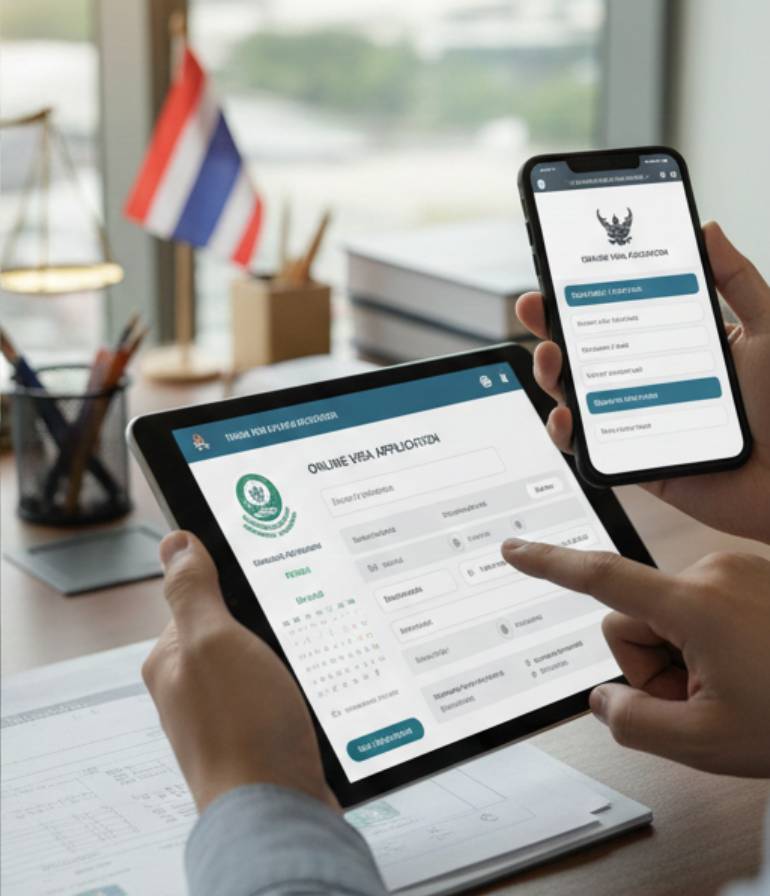
- Online visa application systems
- Work permit e-renewals under certain programs
- Digital appointment scheduling
While these systems promise efficiency, inconsistencies in implementation mean legal firms must stay updated on procedural changes across immigration offices. Localized practices may still differ, making expert guidance even more valuable.
Compliance Pitfalls and How to Avoid Them
Legal firms should educate clients on common risks:
- Overstay and visa expiration: Fines, detention, or blacklisting may result.
- Unauthorized work: Performing duties not listed in the work permit is an offense.
- Incorrect visa type: Using a tourist visa for business activities can lead to serious penalties.
Regular audits of employee documentation and immigration timelines help firms maintain compliance.
Leveraging the Smart Visa Program
For companies in sectors like tech, biotech, logistics, and advanced manufacturing, the Smart Visa offers major advantages:
- No work permit required
- Longer visa validity (up to 4 years)
- No re-entry permit needed
- Streamlined reporting requirements
Legal firms can play a strategic role in evaluating eligibility and facilitating these high-value applications.
The Evolving Landscape: Why Legal Expertise Matters
Thailand’s immigration regulations continue to evolve in response to global mobility demands, economic goals, and regional competition. For companies seeking to attract global talent, partnering with knowledgeable legal professionals ensures:
- Faster processing
- Minimized risk
- Proper long-term workforce planning
- Full alignment with Thai labor and tax laws
Legal firms with a strong grasp of immigration best practices are uniquely positioned to offer strategic value to both domestic and international clients.
