

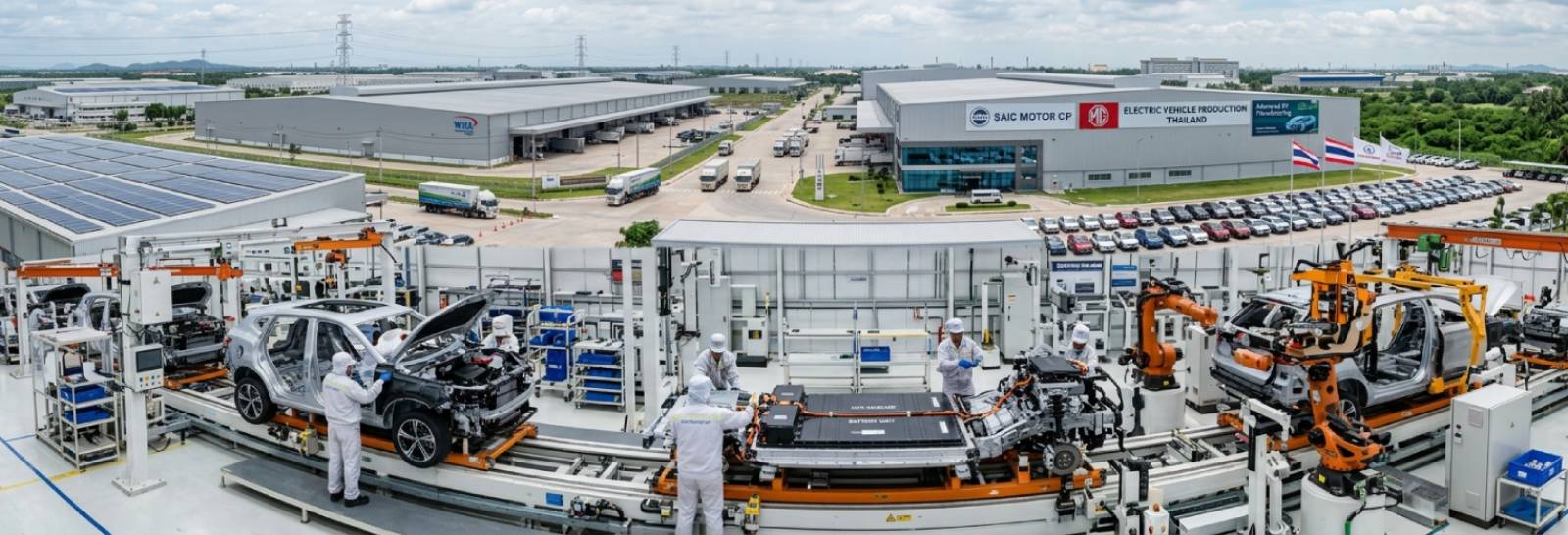
Thailand is no longer competing merely to become an electric vehicle assembly base. In 2026, the country’s industrial policy has entered a far more strategic phase — one focused on controlling the upstream EV supply chain.
The Thailand Board of Investment (BOI) is now directing its strongest incentives toward the domestic production of battery cells, drive motors, high-voltage wiring harnesses, and thermal management systems. The shift marks a major departure from earlier EV promotion schemes that largely emphasized vehicle assembly and consumer subsidies. Today, the priority is deeper industrial localization, technology transfer, and long-term supply chain resilience.
This transformation reflects a broader reality shaping the global automotive industry. As geopolitical tensions intensify and supply chains fragment, countries that control core EV technologies will define the next generation of automotive manufacturing. Thailand intends to be one of them.
Beyond EV Assembly: Thailand’s Industrial Strategy is Evolving
Over the past several years, Thailand successfully attracted major EV manufacturers through tax incentives, import duty reductions, and direct consumer support programs under the EV 3.0 and EV 3.5 policies. The strategy accelerated EV adoption and positioned the country as a leading EV production hub in Southeast Asia.
However, policymakers quickly recognized a critical limitation. While vehicle assembly volumes increased, much of the high-value technology — particularly battery cells and advanced electronic systems — continued to be imported. This created heavy dependence on foreign suppliers and limited Thailand’s ability to capture the most profitable segments of the EV value chain.
The government’s response has been decisive. The latest BOI framework increasingly links investment privileges to local content creation and upstream manufacturing capability. Incentives are no longer designed solely to attract assembly plants; they are structured to build a self-sufficient EV ecosystem capable of supporting regional and global supply chains.
This policy direction is particularly significant as global automakers seek alternatives to concentrated manufacturing dependence in China. Thailand is positioning itself as a stable, technologically capable production base within ASEAN, supported by established automotive infrastructure, deep supplier networks, and the Eastern Economic Corridor (EEC).
Battery Cells Become Thailand’s Most Strategic Manufacturing Target
Among all EV components, battery cells have become the centerpiece of Thailand’s industrial ambitions.
Battery systems account for the largest share of an EV’s total value and remain the most strategically sensitive component in the entire supply chain. Countries capable of producing battery cells domestically gain significant advantages in cost competitiveness, energy security, and technological independence.
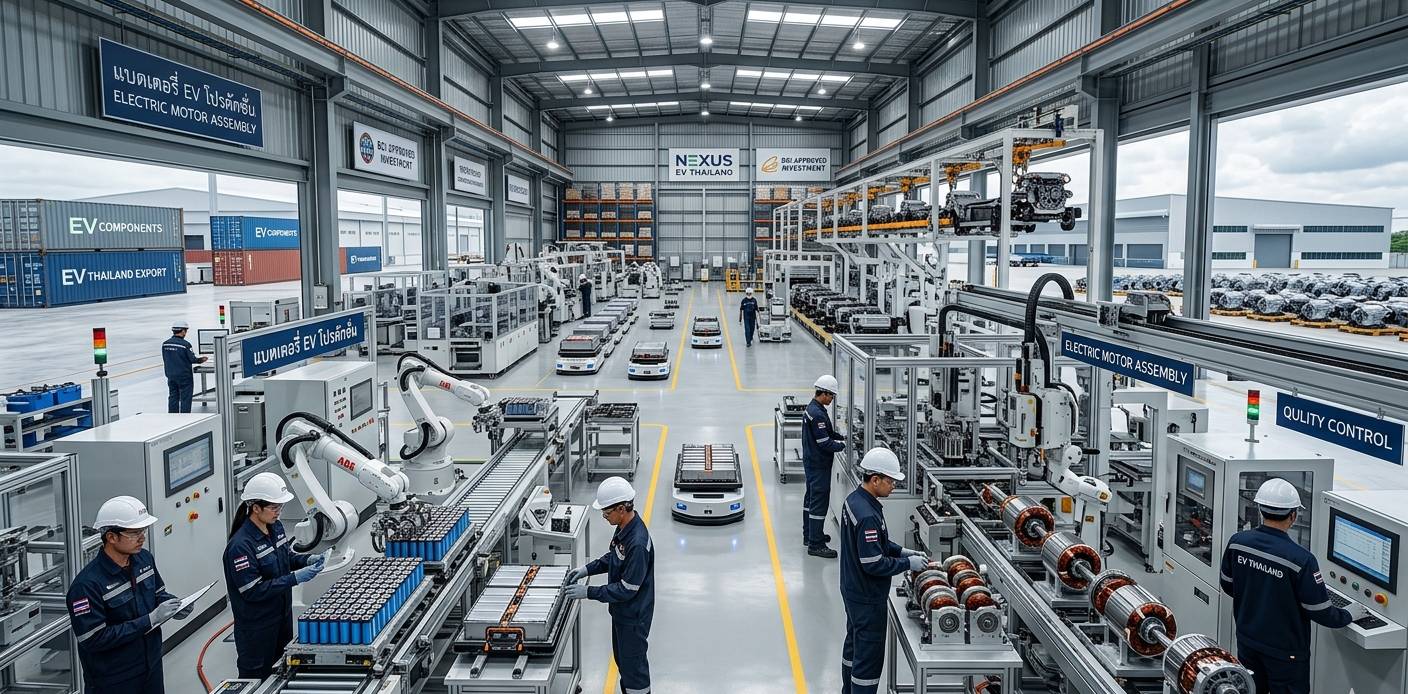
Thailand’s latest incentive structure reflects this reality. Enhanced BOI privileges are now heavily focused on battery cell manufacturing, battery management systems, energy storage technologies, and advanced recycling operations. The government is not only encouraging battery assembly but attempting to establish a fully integrated battery ecosystem spanning electrochemical production, module assembly, second-life applications, and future solid-state battery technologies.
The economic implications are substantial. Domestic battery production reduces exposure to currency volatility, lowers logistics costs, and enables closer integration between suppliers and EV manufacturing plants. It also creates stronger opportunities for technology transfer and high-skilled employment within Thailand’s industrial sector.
More importantly, battery localization strengthens Thailand’s long-term position in the global EV transition. As international markets increasingly prioritize supply chain diversification, countries with domestic battery capabilities will hold far greater strategic importance in global automotive manufacturing networks.
The Rise of High-Value EV Components
Thailand’s upstream strategy extends well beyond batteries. The BOI is aggressively targeting advanced EV components that require specialized engineering expertise and sophisticated manufacturing capability.
Drive motors have become a major focus area because they represent one of the most technologically complex systems within electric vehicles. Unlike conventional combustion engines, EV motors require advanced electromagnetic engineering, inverter integration, thermal efficiency optimization, and high-precision manufacturing processes. By promoting local motor production, Thailand is not only supporting EV manufacturing but also building industrial capabilities that can later expand into robotics, industrial automation, and smart mobility technologies.
At the same time, high-voltage wiring harnesses are emerging as another strategic localization target. EV electrical architectures operate under significantly higher voltage conditions than traditional vehicles, requiring advanced safety standards, specialized insulation systems, and greater thermal resistance. Thailand already possesses a strong automotive parts manufacturing base, and the government is now encouraging suppliers to transition into EV-grade electrical component production.
Thermal management systems are also gaining strategic importance within the country’s EV roadmap. In electric vehicles, thermal efficiency directly impacts battery lifespan, charging speed, driving range, and overall vehicle performance. This issue is especially critical in Southeast Asia, where high ambient temperatures place additional stress on battery systems. Thailand therefore sees an opportunity to develop region-specific expertise in EV cooling technologies and climate-adapted energy management systems that could later serve broader emerging markets with similar environmental conditions.
Localization is Becoming the New Competitive Requirement
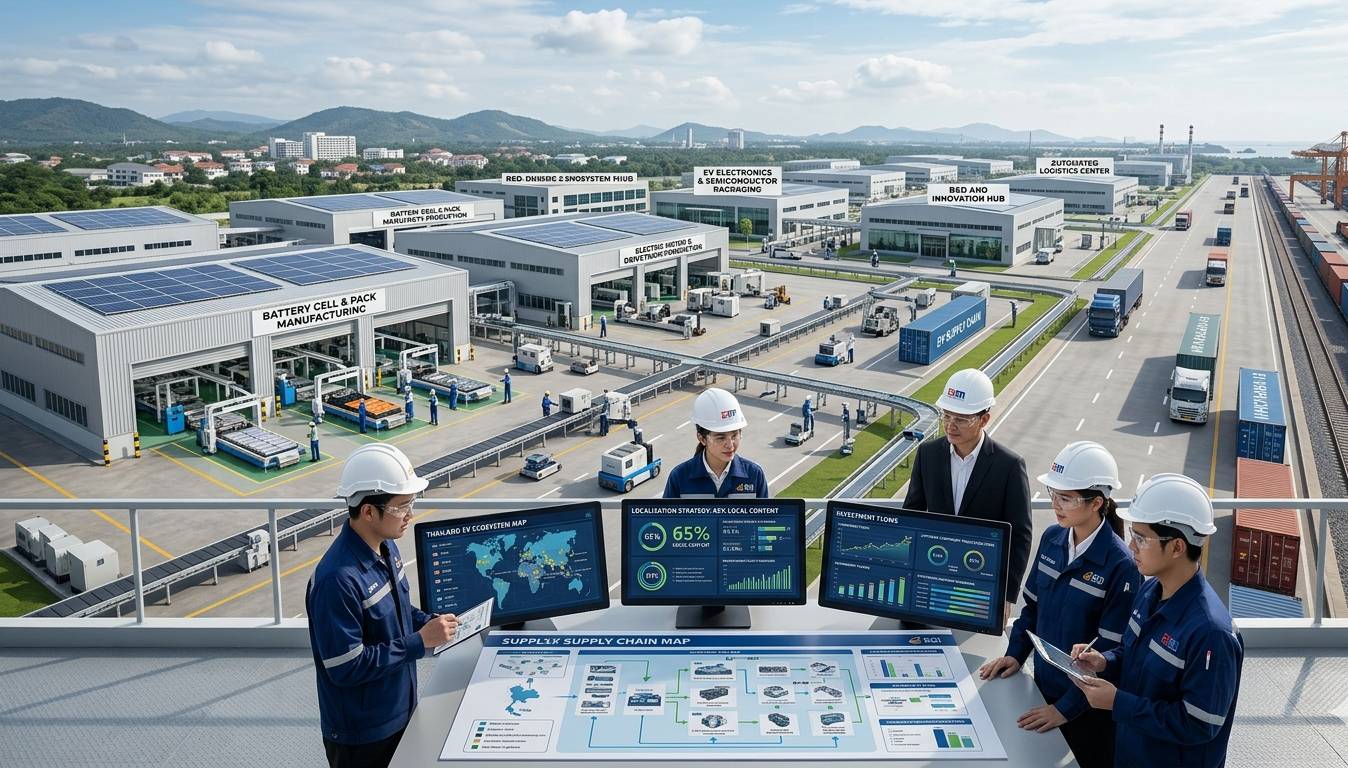
Thailand’s EV policy is evolving from a traditional incentive model into a more sophisticated industrial competitiveness strategy.
Future investment privileges will increasingly depend on measurable domestic value creation rather than simple assembly output. Manufacturers that establish upstream operations and integrate local supply chains are likely to receive stronger tax exemptions, enhanced competitiveness incentives, and broader regulatory support. Conversely, companies that continue relying heavily on imported components may gradually lose strategic advantages under the country’s evolving investment framework.
This approach mirrors the historical success of Thailand’s conventional automotive sector. Over several decades, the country transformed itself into the “Detroit of Asia” by systematically building localized supplier networks and strengthening domestic manufacturing depth. The government is now attempting to replicate this success in the EV era — but with a far stronger emphasis on advanced technology, industrial resilience, and supply chain security.
The implications for foreign investors are clear. Thailand no longer seeks only EV assembly plants. It is building an integrated industrial ecosystem designed to anchor long-term technological manufacturing across the region.
Thailand’s Next Competitive Advantage
Thailand’s 2026 EV strategy represents one of the most important shifts in the country’s industrial policy in decades. The focus on upstream localization signals a transition from volume-based manufacturing toward high-value technological production.
As global supply chains continue to realign, Thailand is positioning itself not simply as an automotive exporter, but as a regional command center for next-generation EV manufacturing. The countries that dominate the future EV economy will not necessarily be those assembling the largest number of vehicles, but those controlling the technologies, components, and supply chains that power them.
Thailand is moving aggressively to become one of those countries.
