

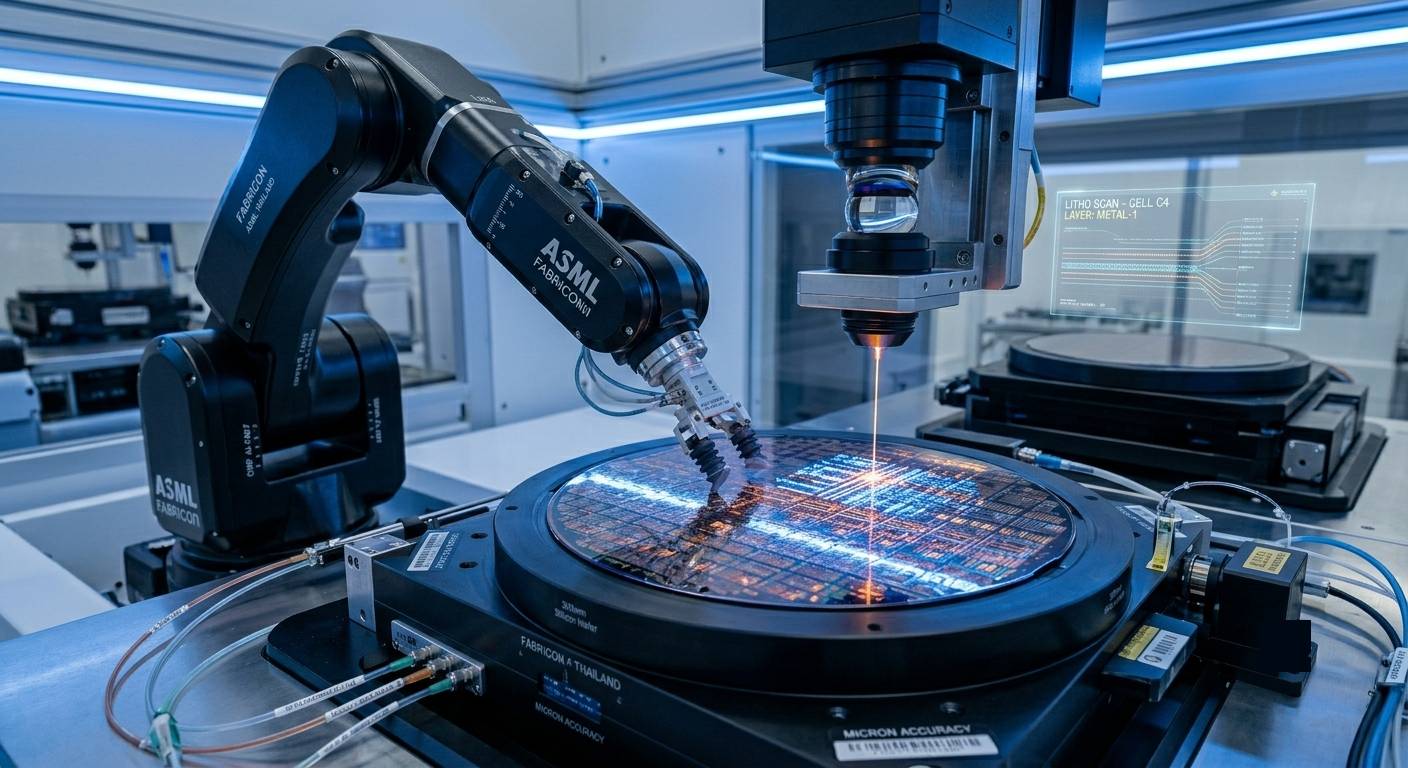
Thailand is entering a new chapter in its industrial development as the Board of Investment (BOI) accelerates efforts to reposition the country within the global semiconductor value chain.
Traditionally recognized as a strong base for semiconductor assembly, testing, and packaging (ATP), Thailand is now shifting its strategic focus toward higher-value front-end semiconductor manufacturing, including wafer fabrication and integrated circuit (IC) design.
This transition reflects more than a policy adjustment. It signals Thailand’s broader ambition to strengthen its role in advanced technology industries at a time when semiconductors have become increasingly critical to economic competitiveness, industrial security, and global supply chain resilience.
As global demand for artificial intelligence, electric vehicles (EVs), industrial automation, and smart electronics continues to grow, semiconductor manufacturing has emerged as one of the world’s most strategically important industries. Governments across Asia, Europe, and North America are aggressively competing to attract semiconductor investment, and Thailand is positioning itself to capture opportunities arising from the restructuring of global technology supply chains.
Thailand’s Shift from Back-End to Front-End Semiconductor Activities
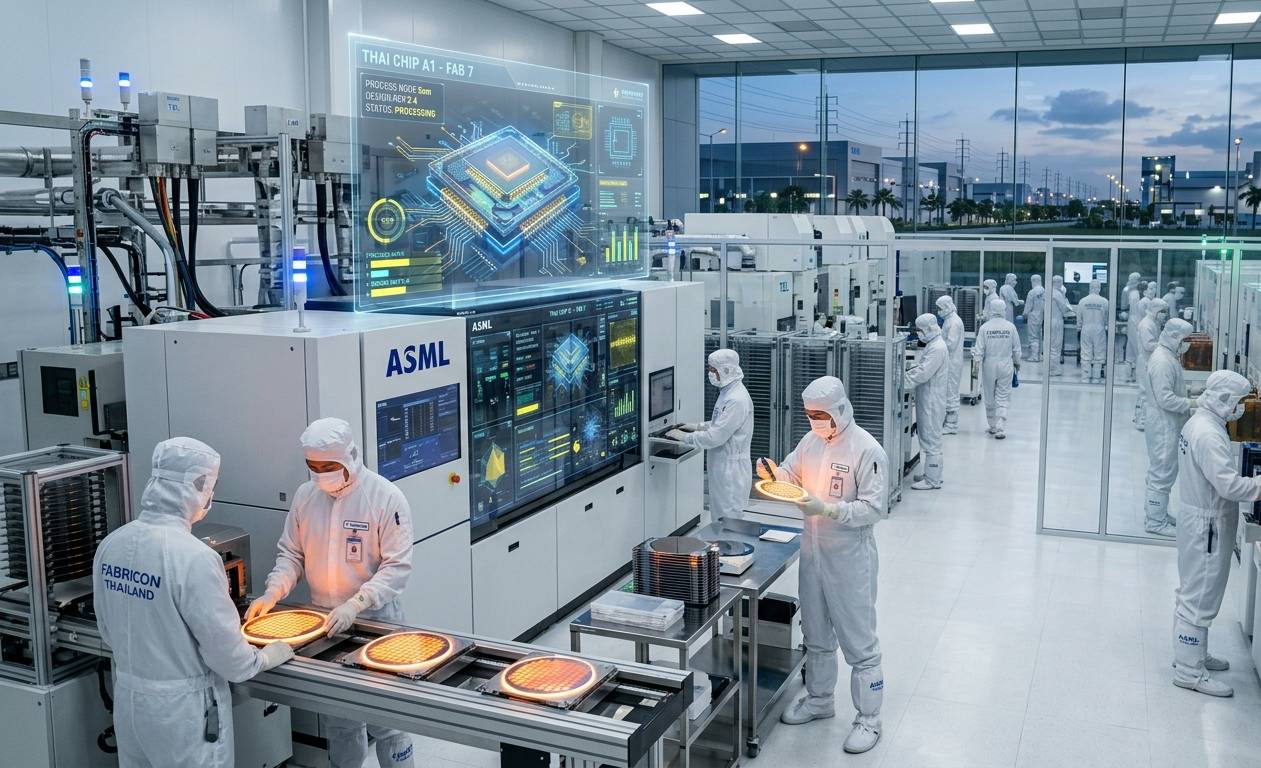
For many years, Thailand’s semiconductor ecosystem has been largely concentrated in back-end operations, particularly assembly, testing, and packaging. These activities helped establish the country as a reliable manufacturing hub supported by strong infrastructure, competitive operating costs, and deep integration with the automotive and electronics sectors.
However, front-end semiconductor manufacturing represents a significantly different level of industrial capability. Processes such as wafer fabrication, lithography, deposition, etching, and advanced chip design require highly sophisticated engineering expertise, precision manufacturing systems, and substantial capital investment.
More importantly, front-end activities generate greater technological value and place countries deeper within global semiconductor supply chains. Thailand’s strategic pivot toward these higher-value operations demonstrates a long-term vision to strengthen national industrial competitiveness and reduce dependence on lower-margin manufacturing segments.
This policy direction also aligns closely with Thailand’s growing EV ecosystem. Modern electric vehicles rely heavily on semiconductors for battery management systems, power electronics, sensors, and advanced driver-assistance technologies. Strengthening domestic semiconductor capability therefore supports Thailand’s broader ambition to remain a leading automotive manufacturing hub in Southeast Asia.
Machinery Flexibility Signals a Sophisticated Industrial Strategy
One of the most significant features of the BOI’s revised semiconductor policy is its flexible approach toward machinery investment. Under the new provision, semiconductor companies are permitted to count high-quality used machinery, up to ten years old, toward minimum investment requirements.
While this may appear to be a technical incentive, it reflects a sophisticated understanding of semiconductor manufacturing economics and industry realities.
Unlike many traditional industries where older equipment rapidly loses competitiveness, semiconductor manufacturing often operates on much longer equipment lifecycles, particularly for mature-node technologies. Many industries, including automotive electronics, industrial automation, medical devices, and power management systems, continue to depend heavily on mature-node semiconductors rather than the most advanced chips.
As a result, equipment such as etching systems, deposition tools, and metrology machines can remain commercially productive for many years when properly maintained.
By recognizing the value of high-quality used equipment, Thailand significantly lowers entry barriers for semiconductor investors. This policy reduces capital expenditure requirements while increasing flexibility for companies seeking to relocate or expand production operations into Southeast Asia.
Capturing Opportunities from Global Supply Chain Diversification

Thailand’s semiconductor strategy comes at a time when multinational technology companies are actively diversifying supply chains due to geopolitical tensions, trade uncertainties, and lessons learned from pandemic-related disruptions.
Global semiconductor manufacturers are increasingly pursuing “China-plus-one” strategies to reduce concentration risks and strengthen supply chain resilience. Thailand’s investment framework positions the country as an attractive destination for companies seeking alternative production locations within Asia.
The BOI’s machinery flexibility provision strengthens this competitiveness by allowing companies to redeploy existing semiconductor equipment into Thailand more efficiently, rather than waiting for long lead times associated with new machinery procurement from global suppliers such as ASML, Applied Materials, and Lam Research.
This pragmatic approach is particularly attractive for mature-node semiconductor manufacturers and specialty chip producers seeking cost-efficient regional expansion opportunities.
Building a Sustainable Semiconductor Ecosystem
Despite the strong policy direction, investment incentives alone will not determine the long-term success of Thailand’s semiconductor ambitions. Front-end semiconductor manufacturing requires far more than physical infrastructure and tax privileges.
Developing a sustainable semiconductor ecosystem depends on the availability of highly skilled engineering talent, advanced research capabilities, specialized supply chains, reliable energy systems, and collaboration between universities and industry.
Countries that succeed in semiconductor development typically build integrated ecosystems that combine manufacturing, innovation, education, and technology development. Thailand’s future competitiveness will therefore depend on its ability to strengthen these supporting foundations alongside investment promotion measures.
Nevertheless, Thailand already possesses several strategic advantages, including its established automotive manufacturing base, strong industrial infrastructure, and central position within Southeast Asia’s supply chain network. These strengths provide a solid foundation for the country’s next phase of semiconductor development.
Thailand’s latest BOI semiconductor strategy represents a significant evolution in the country’s industrial policy framework. By prioritizing front-end semiconductor manufacturing and introducing flexible treatment for high-quality used machinery, Thailand is taking a pragmatic and forward-looking approach to attracting advanced technology investment.
Rather than attempting to compete directly with the world’s most advanced semiconductor economies, Thailand appears focused on building strength in commercially sustainable segments such as mature-node and specialty semiconductor manufacturing. This strategy aligns closely with regional demand growth driven by electric vehicles, industrial automation, and smart electronics.
If supported by continued investment in talent development, infrastructure, and innovation ecosystems, Thailand has the potential to strengthen its position as an important semiconductor manufacturing and technology hub within Southeast Asia’s rapidly evolving industrial landscape.
