


Choosing the right tax allowances in Thailand can significantly reduce your personal income tax burden. However, many taxpayers either overlook key deductions or select allowances without fully understanding the conditions attached to them. Before making decisions on your annual tax filing, it’s important to understand how Thailand’s tax allowance system works and how to choose what truly benefits you.
This guide will walk you through the essentials.
Understand Thailand’s Personal Income Tax Structure
Thailand uses a progressive tax rate system, meaning the more you earn, the higher your tax rate. Rates typically range from 0% to 35%, depending on your net taxable income after deductions and allowances
Your tax calculation generally follows this structure:
- Assessable Income
- Less: Expenses (standard or actual)
- Less: Allowances and Deductions
- Net Taxable Income
- Apply Progressive Tax Rate
Choosing the right allowances directly reduces your net taxable income, which can potentially move you into a lower tax bracket.
Know the Difference Between Expenses and Allowances

Before choosing allowances, it’s important to distinguish:
- Expenses:Related to earning income (e.g., employment income has a standard expense deduction capped at a certain amount).
- Allowances:Personal deductions based on your life situation, investments, insurance, or social contributions.
Many taxpayers focus only on allowances without first optimizing allowable expense deductions.
Common Personal Allowances in Thailand
Personal and Family Allowances
- Personal allowance
- Spouse allowance (if spouse has no income)
- Child allowance (biological and legally adopted children)
- Parental support allowance (subject to income conditions)
Before claiming family allowances, ensure:
- The dependent meets income requirements.
- You have proper documentation (ID copies, household registration, etc.).
Insurance Premium Deductions
- Life insurance premiums
- Health insurance premiums
- Parents’ health insurance
- Social Security contributions
Important considerations:
- Policies must meet Revenue Department criteria.
- There are maximum deduction caps.
- Some insurance must have a minimum coverage period.
Investment-Based Allowances
- Retirement Mutual Funds (RMF)
- Super Savings Funds (SSF) or equivalent current schemes
- Provident Fund contributions
- Government Pension Fund contributions
These options offer tax benefits but require holding periods and involve investment risk. Do not invest purely for tax reduction without understanding liquidity restrictions and long-term financial implications.
Check Eligibility Conditions Carefully
Many allowances come with strict conditions, such as:
- Age limits
- Income thresholds for dependents
- Holding period requirements for investments
- Specific types of qualifying insurance policies
Claiming ineligible deductions may result in:
- Tax reassessment
- Penalties
- Surcharges
Always review Revenue Department guidelines or consult a tax advisor if unsure.
Consider Your Cash Flow and Financial Goals
A common mistake is choosing allowances solely to reduce tax, without considering:
- Cash flow impact
- Long-term financial commitments
- Emergency fund adequacy
- Investment risk tolerance
For example: Locking funds into long-term retirement products may reduce taxes today but strain your short-term liquidity.
Tax planning should align with your overall financial plan — not just year-end tax savings.
Keep Proper Documentation
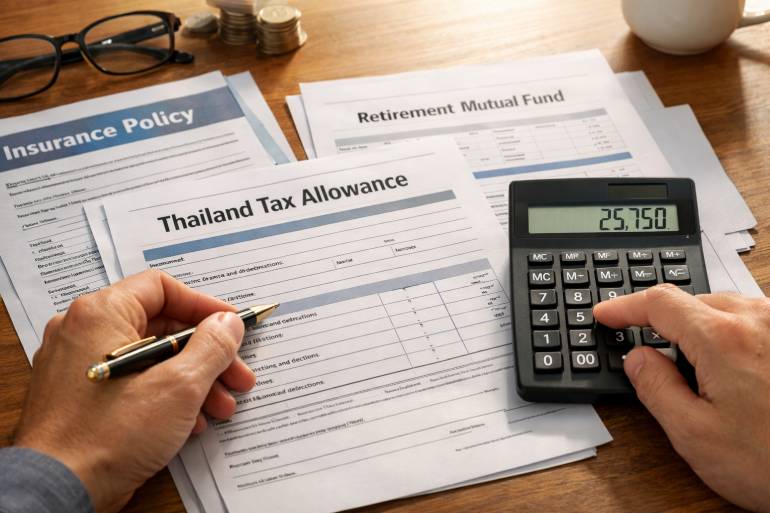
Thailand’s Revenue Department increasingly uses electronic systems and may request supporting documents.
Keep records such as:
- Withholding tax certificates (50 ทวิ)
- Insurance premium receipts
- Investment confirmation letters
- Donation receipts
- Proof of dependent eligibility
Proper documentation ensures smooth filing and protects you in case of audit.
Plan Early — Not at Year-End
Effective tax planning should begin at the start of the tax year, not in December. Early planning allows you to:
- Spread out investments
- Manage cash flow
- Avoid rushed financial decisions
- Maximize eligible deductions
Waiting until the last minute often leads to poor investment choices or missed opportunities.
When to Seek Professional Advice
You may benefit from consulting a tax advisor if you:
- Have multiple income sources
- Are self-employed or run a business
- Have foreign income
- Make large investments
- Support multiple dependents
A professional can help ensure compliance while optimizing your tax position legally and efficiently.
Choosing tax allowances in Thailand is not just about lowering your tax bill — it’s about making informed financial decisions that support your long-term goals.
Before selecting any allowance, ask yourself:
- Am I eligible?
- Do I understand the conditions?
- Does this align with my financial plan?
- Do I have proper documentation?
Smart tax planning combines compliance, strategy, and financial awareness. When done correctly, it not only reduces taxes but also strengthens your overall financial health.
