


Thailand is one of Southeast Asia’s key trade and logistics hubs, strategically positioned at the heart of ASEAN. With strong infrastructure, established free trade agreements, and government support for international commerce, the country continues to attract entrepreneurs and investors looking to operate import and export businesses.
However, success in Thailand’s import–export sector depends not only on market opportunities but also on regulatory compliance and proper business setup. This article provides a practical overview of what you need to know.
Why Thailand Is a Strong Import & Export Hub
Thailand offers several advantages for cross-border trade:
- Strategic location connecting ASEAN, China, India, and global markets
- Well-developed ports, airports, and logistics networks
- Membership in multiple Free Trade Agreements (FTAs)
- Competitive manufacturing and sourcing base
- Business-friendly policies for international trade
These factors make Thailand attractive for businesses involved in trading consumer goods, raw materials, electronics, agricultural products, and industrial equipment.
Setting Up an Import & Export Business in Thailand
To legally operate an import and export business, the company must first be properly established in Thailand.
Key requirements include:
- Company registration with the Department of Business Development (DBD)
- VAT registration with the Revenue Department
- A corporate bank account in Thailand
- Registration with the Thai Customs Department for a paperless import/export license
Once registered, the company can submit customs declarations electronically and legally clear goods through Thai customs.
Import & Export License Explained
The import/export license in Thailand is issued by the Thai Customs Department. It is not product-specific but allows a company to engage in trade activities.
This license enables:
- Electronic customs declarations
- Import and export clearance at ports and airports
- Integration with Thailand’s e-Customs and National Single Window systems
Without this registration, goods cannot be cleared through customs.
Controlled Goods and Special Permits
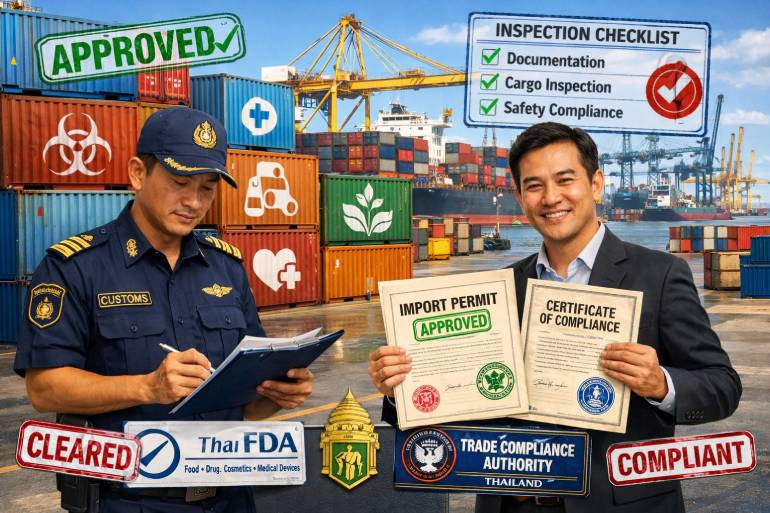
While the standard license covers general trade, certain products require additional permits from relevant authorities, such as:
- Food, supplements, cosmetics, and medical devices (Thai FDA)
- Agricultural products, seeds, or livestock
- Chemicals, hazardous goods, or restricted materials
- Cultural items, antiques, or protected goods
Failing to obtain these permits can lead to shipment delays, fines, or seizure of goods.
Taxes and Duties in Import & Export Operations
Import and export businesses must comply with several tax obligations:
- Customs duties (depending on product type and origin)
- VAT on imports (generally 7%, with creditable input VAT)
- Withholding tax on certain service payments
- Corporate income tax on net profits
Proper tax planning and classification of goods are essential to managing costs and avoiding compliance risks.
Compliance and Risk Management
Common risks in import–export operations include:
- Incorrect HS codes and customs valuation
- Missing permits for controlled goods
- Incomplete documentation
- Non-compliance with VAT and customs reporting
Strong internal controls, accurate documentation, and professional support help ensure smooth operations and protect long-term business value.
Opportunities for Investors and Businesses
For investors, a well-structured import and export business in Thailand offers:
- Scalable regional expansion opportunities
- Access to ASEAN markets
- Predictable regulatory frameworks when compliance is properly managed
- Strong demand across multiple industries
Compliance and transparency are not just legal necessities—they are key drivers of investor confidence and operational sustainability.
Thailand continues to be a compelling destination for import and export businesses. With the right setup, proper licensing, and clear understanding of regulatory requirements, businesses can operate efficiently and grow with confidence.
Whether you are a new entrepreneur or an investor exploring trade opportunities, understanding Thailand’s import–export framework is the first step toward long-term success.
