


Freelancing in Thailand offers flexibility, independence, and access to both local and global clients. But when tax season rolls around, many freelancers—especially first-timers—find themselves confused about what they need to file, how much they owe, and when to do it.
This guide breaks down the basics of tax filing for freelancers in Thailand, so you can stay compliant without the stress.
Who Is Considered a Freelancer in Thailand?
In Thailand, freelancers are generally individuals who earn income independently without being employed by a single company. This includes:
- Designers, writers, developers, consultants, marketers
- Online sellers and content creators
- Tutors, translators, photographers
- Remote workers with overseas clients (depending on tax residency)
If you earn income outside a traditional employment contract, you are usually responsible for managing and filing your own taxes.
Do Freelancers Have to Pay Tax in Thailand?
Yes. If you are tax resident in Thailand (generally staying 180 days or more in a calendar year), your income may be subject to Thai personal income tax.
Thai tax law distinguishes income by type. Most freelance income falls under service income, which is taxable.
Important Notes:
- Income sourced in Thailand is taxable.
- Foreign-sourced income may also be taxable if brought into Thailand in the same tax year (rules can be complex, so professional advice is recommended for expats).
Tax ID and Registration
If you don’t already have one, you’ll need to obtain a Thai Tax Identification Number from the Revenue Department. This is required before filing any tax returns.
Some freelancers may also need to register as a sole proprietor if operating under a business name, though many individuals file under their personal name.
Types of Taxes Freelancers Should Know

1. Personal Income Tax (PIT)
Thailand uses a progressive tax system, meaning the tax rate increases as your income increases. Freelancers must file an annual personal income tax return declaring their total earnings.
2. Withholding Tax (WHT)
Some clients—especially Thai companies—may deduct withholding tax (commonly 3%) before paying you. This is not an extra tax; it’s a prepayment that can be credited against your annual tax liability.
Always keep withholding tax certificates provided by clients.
3. Value Added Tax (VAT)
If your annual income exceeds 1.8 million THB, you may be required to register for VAT. Once registered, you must:
- Charge VAT on applicable services
- File monthly VAT returns
Not all freelance services are VAT-exempt, so this is an area where professional advice helps.
Allowable Deductions and Expenses
One advantage of freelancing is the ability to reduce taxable income through deductions. Freelancers can usually choose between:
- Standard expense deduction (a fixed percentage, depending on income type)
- Actual expenses, such as:
- Equipment and software
- Internet and phone bills
- Workspace or home office costs
- Professional fees and subscriptions
In addition, personal allowances and deductions (such as insurance or retirement funds) may also apply.
Filing Deadlines You Shouldn’t Miss
- Mid-year tax return (PND 94): Filed around September for income earned in the first half of the year
- Annual tax return (PND 90): Filed by March of the following year
Late filing can result in fines and surcharges, so marking these dates is crucial.
Common Mistakes Freelancers Make
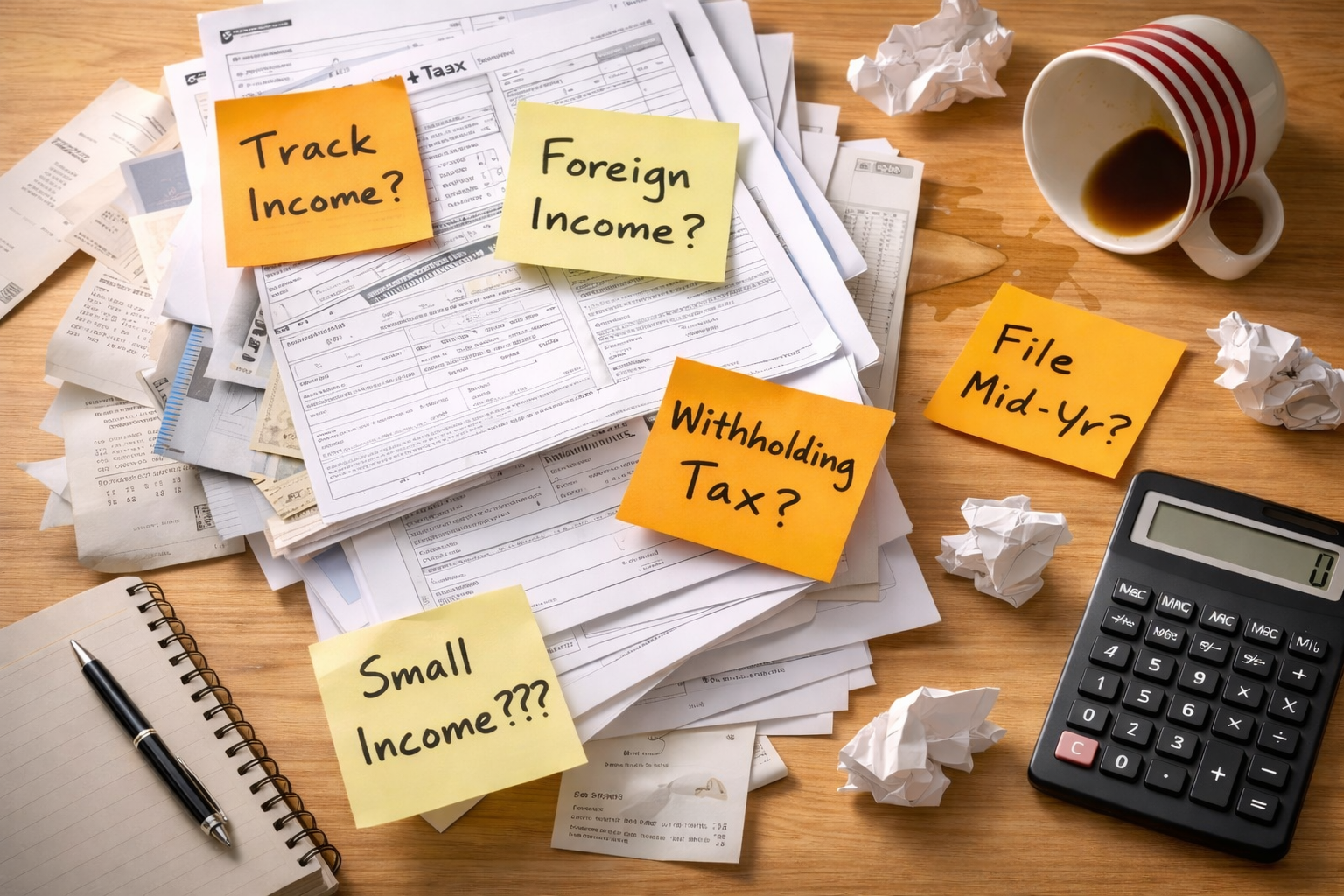
- Not tracking income consistently
- Ignoring foreign income implications
- Forgetting to claim withholding tax credits
- Missing mid-year filing requirements
- Assuming small income doesn’t need to be reported
Even if your income is modest, filing correctly helps avoid problems later.
Should You Hire an Accountant?
While it’s possible to file taxes yourself, many freelancers choose to work with an accountant—especially if they:
- Have multiple income sources
- Earn income from overseas
- Are close to the VAT threshold
- Want peace of mind and compliance
A good accountant can also help optimize deductions and ensure accurate filing.
Tax filing may not be the most exciting part of freelancing, but staying compliant in Thailand is essential for long-term success. With proper planning, good record-keeping, and an understanding of your obligations, tax season doesn’t have to be overwhelming.
When in doubt, seek professional advice—your future self (and your wallet) will thank you.
