

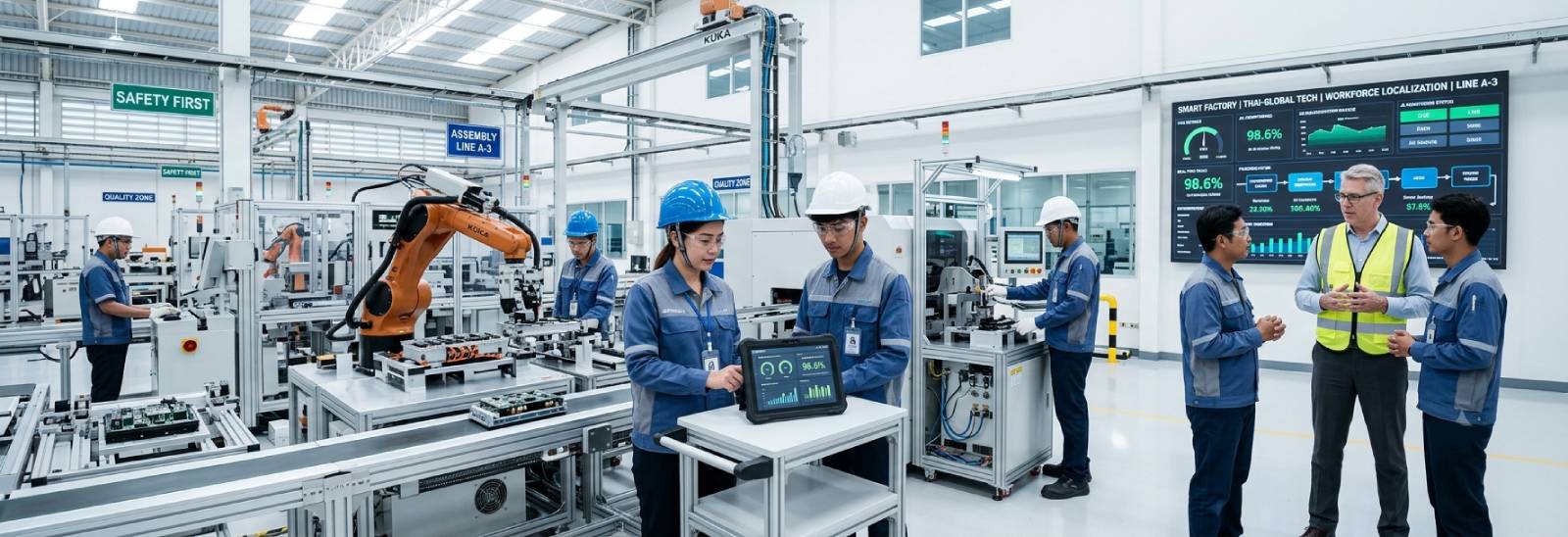
Thailand’s industrial policy is entering a far more strategic phase in 2026. For years, the country competed primarily on investment incentives, export infrastructure, and cost-efficient manufacturing.
Today, the policy direction is evolving toward something deeper: embedding technology transfer, workforce localization, and domestic capability development into the investment ecosystem itself.
One of the clearest examples is the new workforce localization requirement introduced under Thailand’s Board of Investment (BOI) Notification Por. 8/2568. Under the updated framework, BOI-promoted manufacturing companies with more than 100 employees must ensure that at least 70% of their workforce consists of Thai nationals. The regulation applies to new BOI-promoted projects from October 2025 and to previously promoted projects from January 2026.
At first glance, the measure appears to be a conventional labor localization policy. In reality, it reflects a broader transformation in Thailand’s economic strategy — one designed to reposition the country from a low-cost production base into a higher-value industrial and technological hub.
From “Assembly Hub” to Capability-Based Manufacturing Economy
Thailand’s industrial success over the past three decades has been built on attracting multinational manufacturers in automotive, electronics, petrochemicals, and consumer goods. However, policymakers increasingly recognize a structural limitation within this model: many industries remained heavily dependent on imported technology, expatriate expertise, and foreign managerial control.
The new 70% Thai workforce mandate signals that Thailand no longer wants investment measured solely by factory construction or export volume. The government is now emphasizing “embedded economic value” — meaning investment must also create domestic technical talent, managerial succession, and local industrial competencies.
This policy direction is closely aligned with Thailand’s ambitions in semiconductors, EV ecosystems, smart electronics, robotics, and Industry 4.0 manufacturing. These sectors require not only machinery investment but also a long-term skilled workforce pipeline capable of supporting advanced production systems.
The concern among policymakers is clear: without workforce localization requirements, highly automated facilities risk becoming “detached production islands” where critical engineering knowledge remains concentrated among expatriate teams while local economic spillover remains limited.
The 70% quota therefore acts as a policy mechanism to ensure that foreign direct investment contributes to domestic human capital accumulation rather than functioning as a purely extractive production model.
Why the Policy Matters More in the Era of Smart Manufacturing
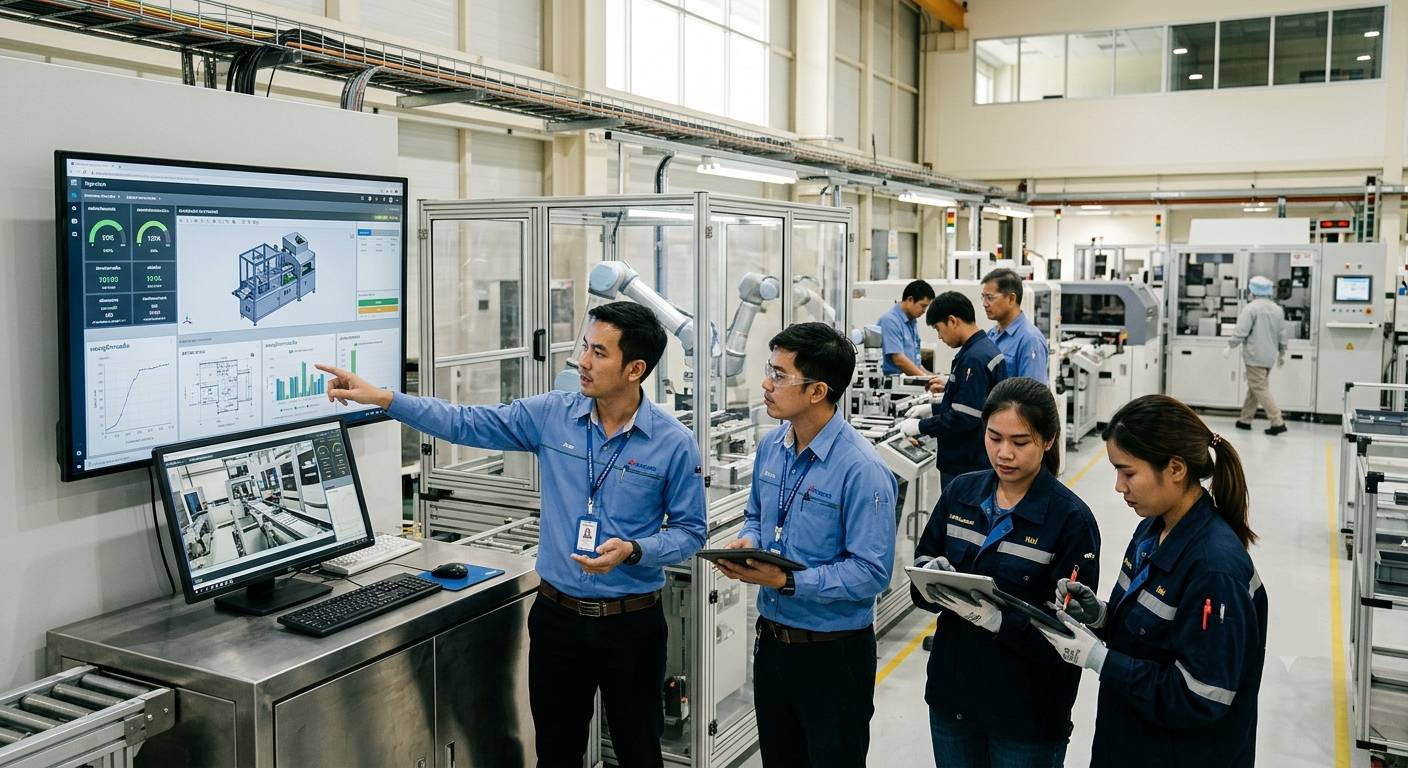
The timing of the regulation is particularly important because it arrives during Thailand’s accelerated push toward smart manufacturing and automation.
Modern factories increasingly rely on robotics, AI-driven production management, predictive maintenance systems, and advanced semiconductor-based equipment. While automation reduces dependency on low-skilled labor, it simultaneously increases demand for highly specialized engineers, technicians, software operators, and process-control professionals.
Thailand’s BOI appears to be proactively addressing a future risk: the emergence of highly automated factories operated almost entirely by imported technical personnel.
By imposing workforce localization requirements alongside stricter expatriate salary thresholds, the BOI is effectively reshaping the labor structure of future industrial projects. Foreign specialists are still welcomed, but they are increasingly expected to occupy genuinely high-value strategic roles rather than broad operational staffing positions.
This reflects a major shift in investment philosophy. Thailand is no longer competing solely as a destination for labor-intensive manufacturing. Instead, it is trying to build a sustainable industrial ecosystem where foreign expertise acts as a catalyst for local capability development.
The policy also aligns with broader global trends. Countries such as the United States, Japan, South Korea, and members of the European Union are increasingly linking industrial incentives with workforce development, domestic supply chain resilience, and national technological competitiveness.
Thailand’s localization rule should therefore be viewed within the context of a global industrial policy realignment rather than as an isolated labor regulation.
Strategic Implications for Foreign Investors and Multinational Manufacturers
For multinational manufacturers, the operational implications are substantial.
Historically, many foreign-invested factories in Southeast Asia relied heavily on expatriate technical teams during expansion phases. Under the new framework, workforce planning in Thailand will require a much more localized structure from the beginning of the investment lifecycle.
This means investors will need to rethink several strategic areas simultaneously:
- Long-term technical training pipelines
- Partnerships with Thai universities and vocational institutes
- Leadership succession planning for Thai middle management
- Knowledge transfer frameworks between expatriates and local staff
- Workforce retention strategies in high-demand engineering sectors
The regulation effectively transforms human capital strategy into a compliance issue directly connected to BOI privileges, visa approvals, and investment incentives. Several legal and advisory firms have already noted that non-compliance could affect approvals for foreign personnel and potentially expose companies to greater regulatory scrutiny.
At the same time, the policy may benefit companies willing to localize deeply. Firms that successfully develop Thai engineering and technical talent are likely to gain stronger government support, greater operational stability, and reduced long-term labor costs compared with organizations that remain structurally dependent on expatriates.
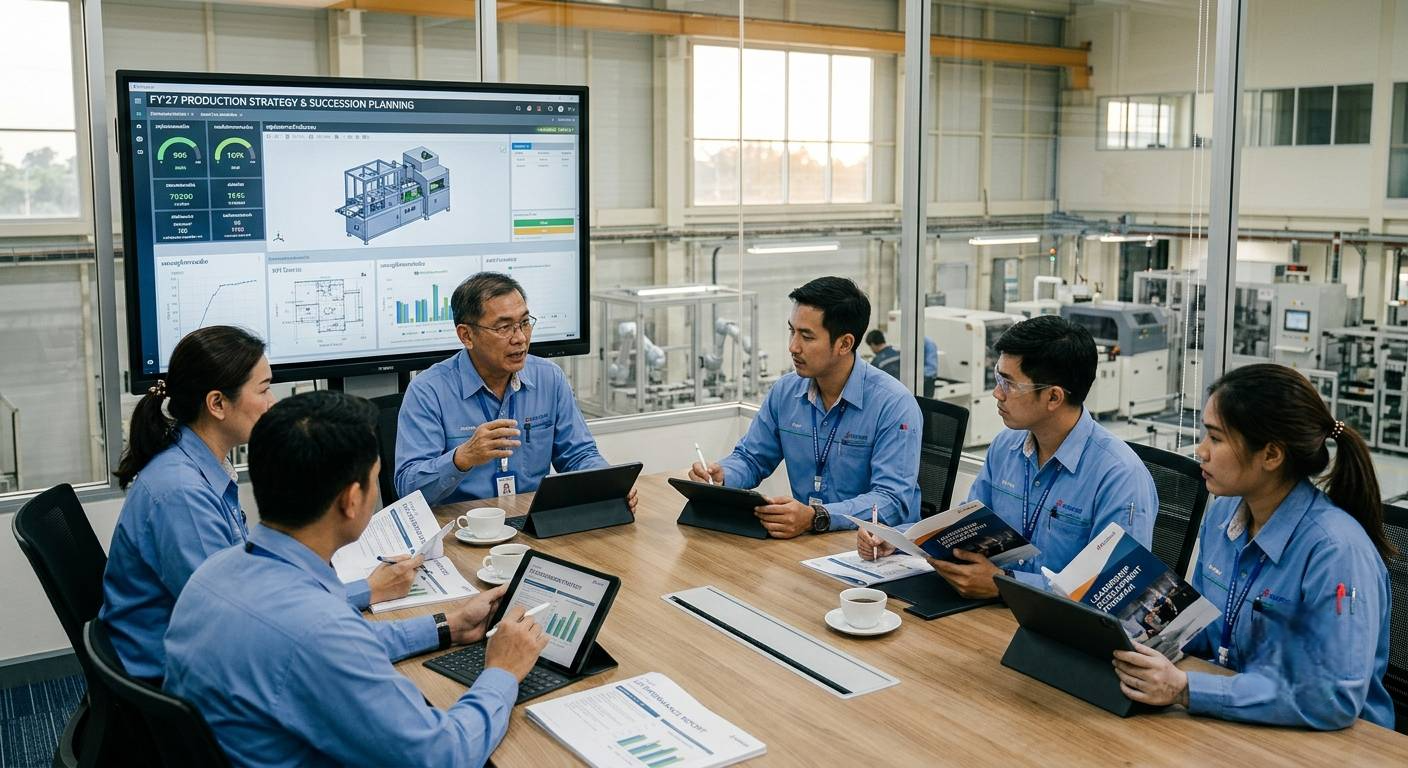
In practice, the regulation may accelerate the rise of hybrid industrial models where foreign firms increasingly operate through Thai-led engineering and operational teams while reserving expatriate roles for highly specialized strategic functions.
Thailand’s Real Objective: Building Industrial Sovereignty
The most important aspect of the 70% workforce requirement is that it reveals Thailand’s broader economic objective: industrial sovereignty.
Thailand understands that future economic competitiveness will not be determined solely by factory volume, but by control over technology ecosystems, skilled labor capacity, supply chain resilience, and innovation capabilities.
This is why the workforce quota has emerged simultaneously with other government initiatives focused on upskilling Thai workers, strengthening domestic suppliers, promoting Thai-foreign joint ventures, and accelerating next-generation industries such as EVs, semiconductors, and advanced electronics.
The government is effectively attempting to close the historical gap between foreign industrial investment and domestic technological advancement.
Whether the strategy succeeds will depend heavily on Thailand’s ability to rapidly improve engineering education, vocational training quality, and advanced manufacturing talent development. Workforce localization mandates alone cannot create a high-tech economy. However, they can force the structural conditions necessary for capability transfer to occur.
For investors, the message from Thailand is becoming increasingly clear: future incentives will favor companies that do not merely manufacture in Thailand but actively help Thailand develop its own industrial competencies.
In 2026 and beyond, localization is no longer just a labor requirement. It is becoming a central pillar of Thailand’s industrial transformation strategy.
