


Thailand is accelerating its digital economy strategy, and small and medium-sized enterprises (SMEs) are at the center of this transformation. In 2026, the Thai government introduced a powerful incentive allowing SMEs to claim a 200% tax deduction on qualifying digital investments, making technology adoption more affordable and accessible for businesses.
This initiative is part of the government's broader effort to promote digital transformation and strengthen the competitiveness of Thai SMEs in a rapidly evolving global economy.
What Is Thailand’s 200% Digital Tax Deduction?
Thailand’s government issued Royal Decree No. 802 (B.E. 2569), providing SMEs with an enhanced corporate income tax deduction for investments in digital technology. Under this measure, eligible businesses can deduct twice the amount of qualifying digital expenses when calculating taxable income.
For example:
- If an SME spends THB 100,000 on approved digital services,
- The business can deduct THB 200,000 from its taxable income.
This incentive effectively reduces tax liability while encouraging businesses to invest in modern technology.
Key Features of the Digital Tax Incentive
1. Double Tax Deduction (200%)
SMEs can deduct 200% of qualifying digital expenses — the normal expense deduction plus an additional tax incentive.
2. Maximum Deduction Limit
The enhanced deduction applies to digital expenses up to THB 300,000 per accounting year. Any spending beyond this amount can still be deducted at the normal rate.
3. Eligible Period
The measure applies to expenses incurred from 24 June 2025 until 31 December 2027.
Which Businesses Qualify?
To benefit from this tax incentive, businesses must meet the SME criteria in Thailand:
- Paid-up capital not exceeding THB 5 million
- Annual revenue not exceeding THB 30 million
- Registered as a juristic company or partnership in Thailand
Both Thai-owned and foreign-owned SMEs operating in Thailand can qualify if they meet these conditions.
What Digital Expenses Are Eligible?
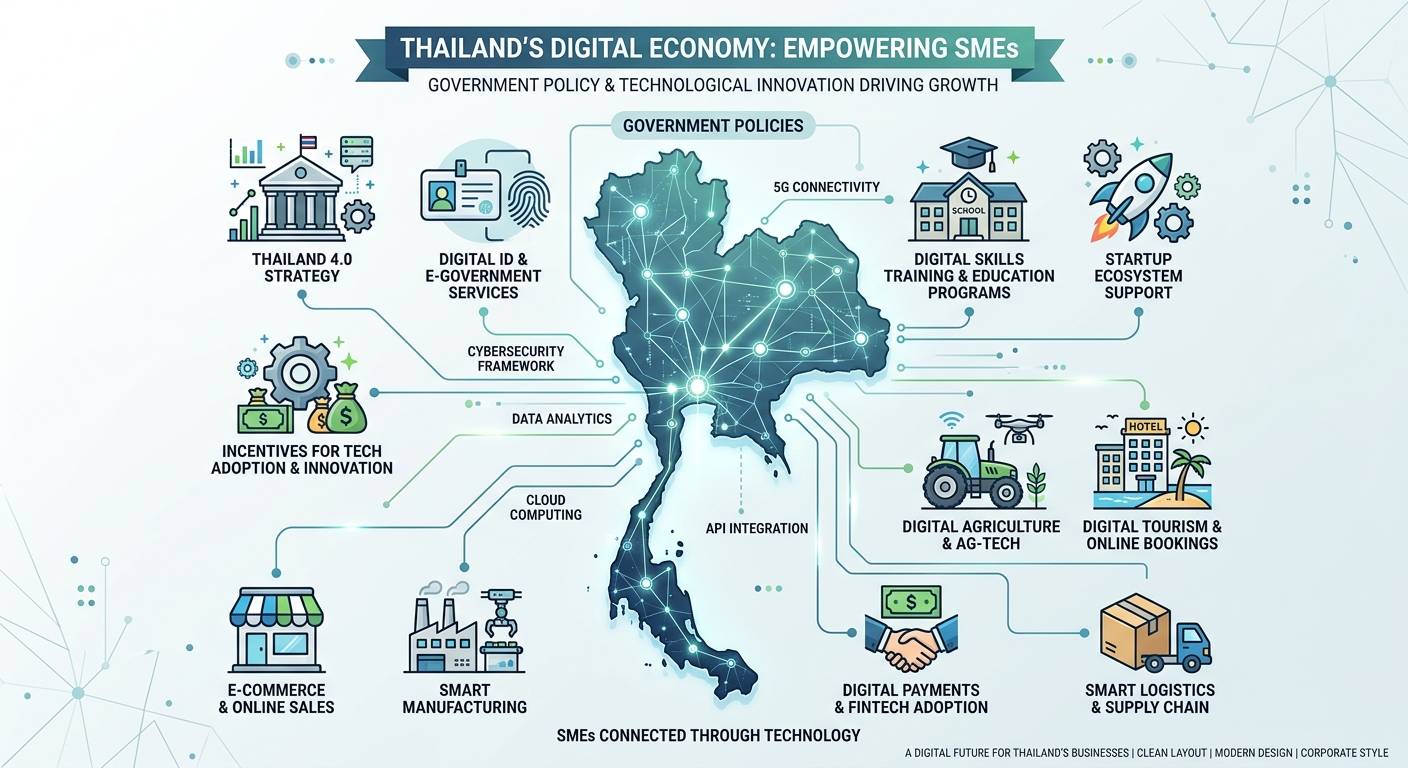
The tax deduction applies to digital technology products and services approved by the Digital Economy Promotion Agency (DEPA). Examples include:
- Cloud-based accounting or ERP systems
- CRM platforms and business management software
- E-commerce systems
- Cybersecurity services
- AI analytics tools
- Smart devices and IoT equipment
- Digital platforms that improve business operations
However, only solutions registered with DEPA are eligible for the enhanced tax deduction.
Why This Matters for SMEs
Many SMEs hesitate to adopt digital technology due to cost concerns. This tax incentive addresses that challenge by reducing the financial burden.
Key Benefits
- Lower tax liability
- Affordable digital transformation
- Improved productivity and efficiency
- Better competitiveness in digital markets
By encouraging SMEs to adopt digital tools such as cloud accounting, automation systems, and AI-powered analytics, Thailand aims to strengthen the country’s digital economy.
Example of Tax Savings
This means SMEs can reduce their taxable income significantly while modernizing their operations.
How SMEs Can Claim the Deduction
To claim the incentive, businesses should:
- Purchase digital products or services approved by DEPA.
- Keep tax invoices and payment records.
- Maintain documentation confirming DEPA registration of the solution.
- Claim the deduction in the corporate income tax filing with the Thai Revenue Department.
Proper documentation is essential in case of a tax audit.
Thailand’s 200% digital tax deduction is more than just a tax benefit—it is a strategic initiative to drive SME innovation and digital transformation. By lowering the cost of adopting new technologies, the government is enabling businesses to improve efficiency, expand online, and remain competitive in the digital economy.
For SMEs that have not yet started their digital transformation journey, 2026 may be the perfect time to invest in technology while enjoying significant tax savings.
