


The rapid growth of e-commerce in Thailand has created many opportunities for individuals and small businesses to sell products online. From social media shops to marketplace sellers on platforms like Shopee, Lazada, and TikTok, thousands of entrepreneurs are earning income online.
However, with this growth comes increased tax compliance requirements. In 2026, online sellers in Thailand must understand whether they need to maintain income and expense records for tax filing.
This article explains the legal requirements and why proper record-keeping is essential for online businesses.
Online Sellers Are Required to File Income Tax
In Thailand, income earned from selling products online is considered taxable income under Section 40(8) of the Thai Revenue Code, which applies to business income.
This means that individuals who earn money from online sales must file personal income tax, even if selling online is only a side business.
Generally, tax filing becomes mandatory when annual income from online sales exceeds:
- 60,000 THB per year for single individuals
- 120,000 THB per year for married couples
Online sellers must usually file tax twice each year:
- PND.94 – Mid-year tax return
- PND.90 – Annual tax return
Do Online Shops Need Income and Expense Records?
Yes. In many cases, online sellers should keep income and expense records to properly calculate their taxable profit.
When filing personal income tax for online sales, sellers can choose between two methods:
Actual Expense Method
Under this method, sellers deduct their real business expenses from total income to calculate taxable profit.
To use this method, sellers must keep accurate documentation such as:
- Sales records
- Purchase invoices
- Shipping costs
- Advertising expenses
- Packaging costs
- Bank or e-payment records
Maintaining these documents helps prove the actual business costs if the tax authority reviews the tax return.
Standard Expense Deduction (60%)
Alternatively, online sellers can apply a standard deduction of 60% of revenue as expenses.
This option is simpler because sellers do not need to provide detailed expense documents. However, it may not be beneficial if real expenses are higher than the standard deduction.
Government Monitoring of Online Sales
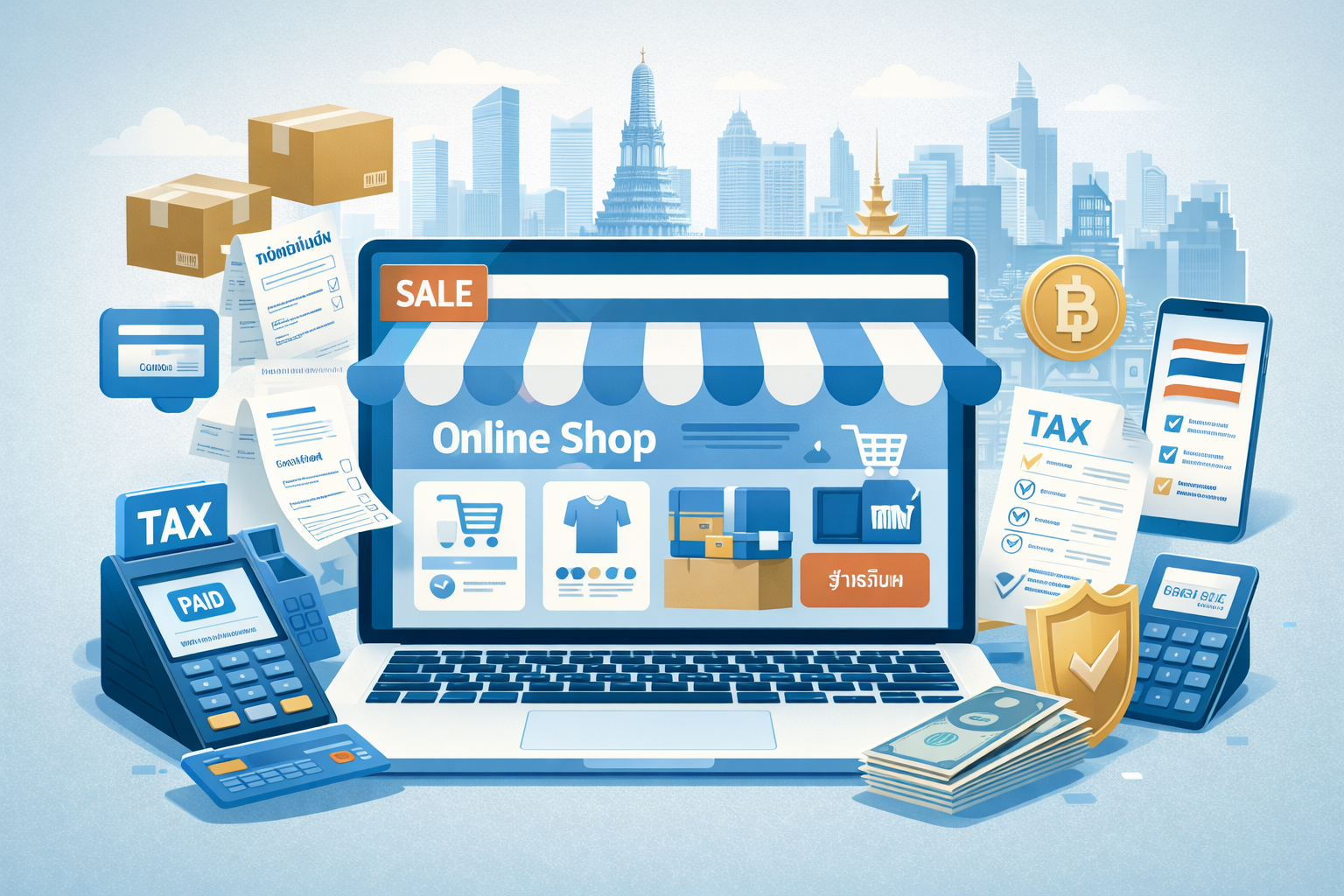
Thailand has strengthened tax monitoring for digital businesses in recent years.
Since 2024, large online platforms must report income information of sellers to the Revenue Department.
This rule allows tax authorities to verify the income earned by sellers through marketplaces and digital platforms.
Additionally, banks may report certain transaction patterns to the Revenue Department, such as:
- 3,000 or more transactions per year, or
- 400 transactions with a total value exceeding 2 million THB.
Because of these monitoring systems, keeping accurate financial records is increasingly important for online sellers.
When Online Sellers Must Register for VAT
Besides income tax, some online businesses may also need to register for Value Added Tax (VAT).
VAT registration becomes mandatory when annual revenue exceeds:
1.8 million THB per year
After registration, the business must charge 7% VAT and submit monthly VAT filings.
Why Keeping Proper Records Is Important
Although some sellers can use the standard deduction method, maintaining proper income and expense records is still recommended.
Good record-keeping helps businesses:
- Accurately calculate taxable income
- Reduce tax risk during audits
- Track business profitability
- Prepare financial statements for business growth
It also makes tax filing faster and more reliable.
In 2026, online shops in Thailand are required to report their income and comply with tax regulations. While sellers can choose between standard expense deductions or actual expense deductions, maintaining proper income and expense records is highly recommended.
With the Thai government increasing transparency and monitoring of e-commerce transactions, proper accounting practices are becoming essential for online businesses.
For online entrepreneurs, good bookkeeping is not only about tax compliance—it is also a key step toward building a sustainable and professional business.
