

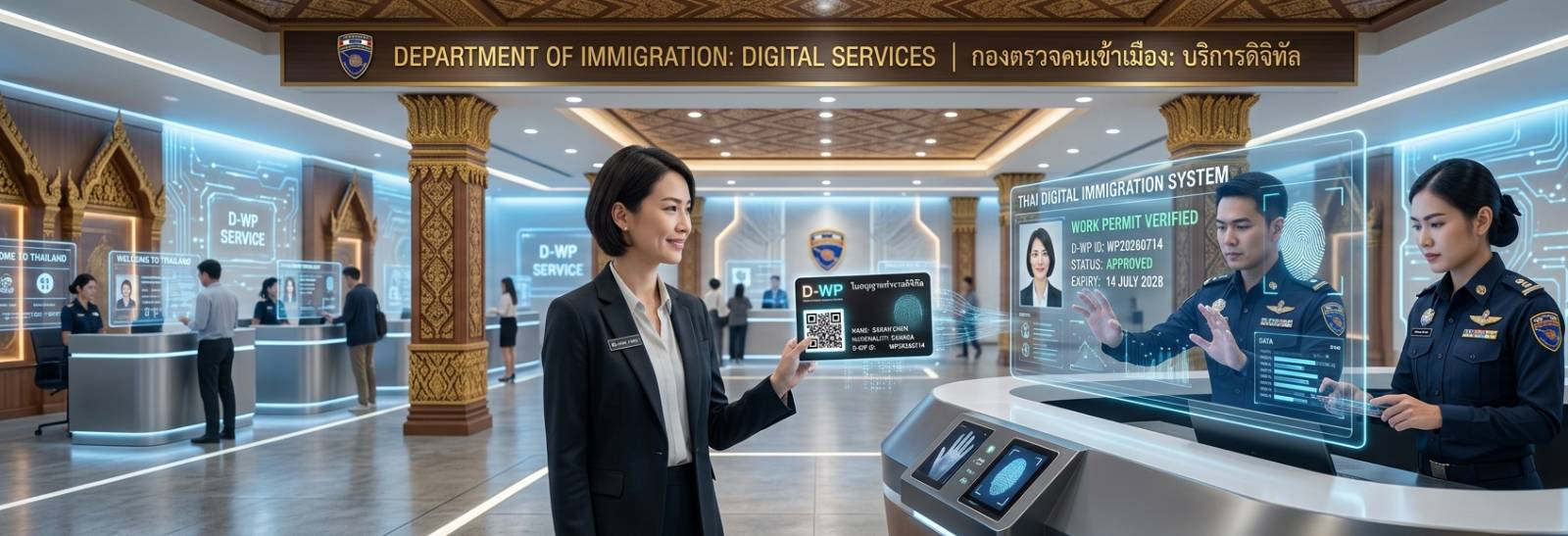
Thailand’s immigration and employment landscape has entered a new digital era in 2026. Following years of gradual reforms, the Department of Employment (DOE) has now fully transitioned to a mandatory electronic work permit system, fundamentally changing how foreign nationals and employers manage work authorization in Thailand.
As of late January 2026, the transition period for paper-based applications officially ended. All work permit applications, renewals, amendments, and cancellations must now be processed entirely through the official e-Work Permit portal at eworkpermit.doe.go.th. The traditional blue work permit book — once a familiar document for expatriates working in Thailand — is being phased out and replaced by a modern Digital Work Permit (D-WP) card.
This development is not simply an administrative update. It reflects Thailand’s broader transformation toward digital governance, biometric immigration systems, AI-assisted compliance monitoring, and a more strategic visa framework designed to attract skilled professionals, investors, and remote workers.
The Official End of Thailand’s Paper-Based Work Permit System
Thailand officially launched the nationwide e-Work Permit system in October 2025 as part of the Ministry of Labor’s digital transformation initiative. Initially, authorities allowed temporary manual submissions due to technical issues and transition challenges. However, by late January 2026, the Department of Employment formally concluded the transition period and made the digital platform fully mandatory for all users.
Under the new framework, employers and foreign employees are now required to complete nearly every stage of the work permit process online through the eworkpermit.doe.go.th platform. This includes new applications, renewals, amendments, cancellations, document submissions, payment processing, and status tracking. The new system significantly reduces the need for physical visits to labor offices while creating a centralized database connected with other government agencies.
The Replacement of the Traditional Blue Work Permit Book
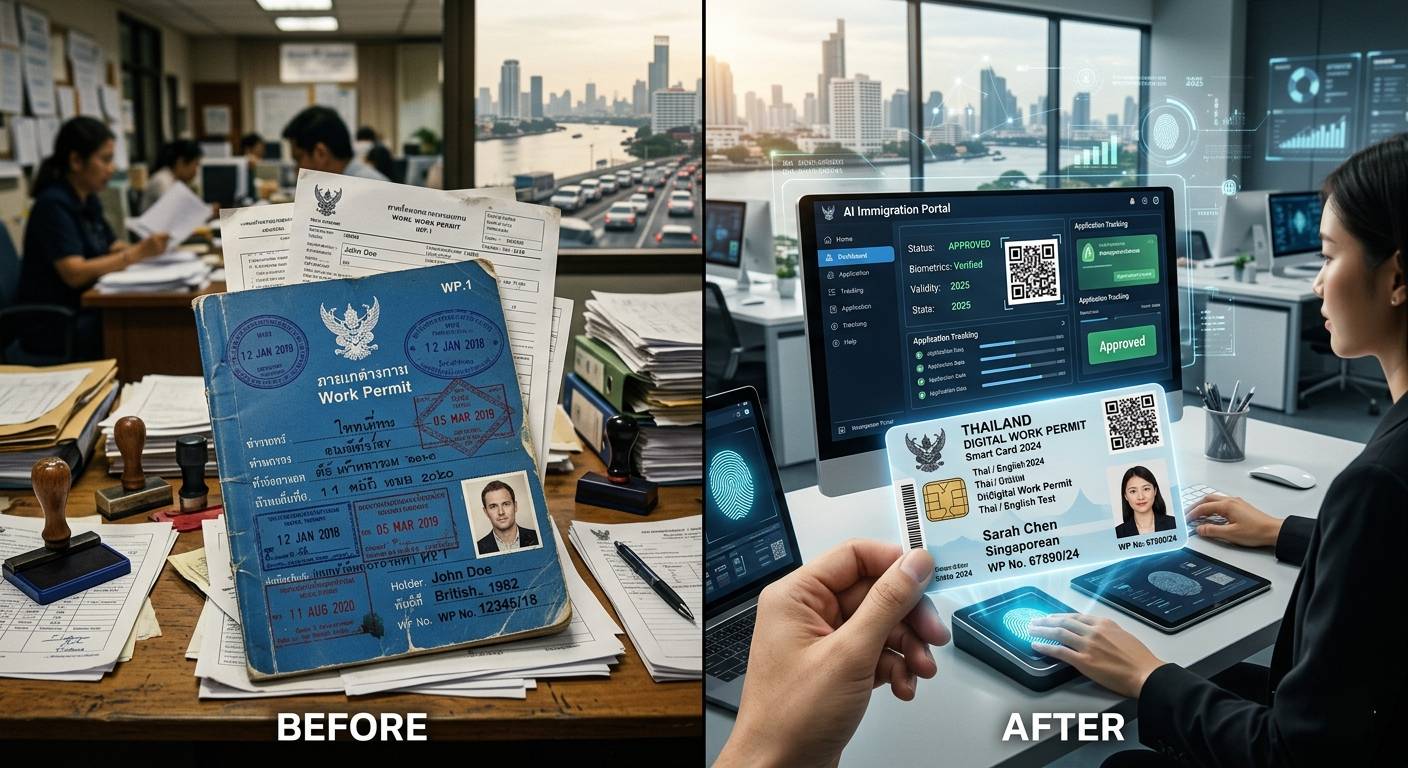
One of the most significant changes under the new system is the gradual disappearance of Thailand’s traditional blue work permit book.
Foreign workers now receive a credit-card-sized Digital Work Permit (D-WP) ID containing an embedded QR code, barcode authentication, and biometric-linked identification connected directly to the Department of Employment’s centralized database. Immigration officers, labor inspectors, and police authorities can instantly verify the validity of a work permit through digital scanning technology.
This modernization aims to reduce document fraud, improve transparency, and accelerate verification procedures during inspections and immigration checks.
AI-Driven Immigration and Compliance Monitoring
Thailand’s visa and work permit reforms in 2026 extend far beyond simple digitization.
Authorities are increasingly integrating AI-assisted filtering systems, biometric tracking technologies, and cross-agency data synchronization into immigration and labor compliance operations. These systems are designed to identify irregular employment activity, visa misuse, overstays, and unauthorized work more efficiently than in previous years.
In practice, this means immigration enforcement is becoming more data-driven and proactive.
Foreign nationals should expect increased scrutiny regarding the consistency between their visa category and employment activity, employer registration details, tax compliance records, social security contributions, and work authorization validity. Authorities also have greater visibility into travel history, physical work locations, and frequency of border entries and exits.
As a result, the era of informal employment arrangements and repeated “visa runs” has significantly diminished as Thailand moves toward a more structured and technology-based immigration environment.
Thailand’s Shift Toward Targeted Visa Categories
At the same time, Thailand is repositioning itself to attract higher-value foreign talent and investment.
Rather than encouraging long-term tourist stays through repeated border runs, Thailand’s current immigration strategy focuses on targeted visa programs for:
- Skilled professionals
- Technology specialists
- Foreign investors
- Startup founders
- Remote workers and digital nomads
- Long-term residents
- BOI-promoted business sectors
Programs such as the Long-Term Resident (LTR) Visa, SMART Visa, and specialized investment-based visa categories continue to receive strong policy attention because they align closely with Thailand’s economic development goals and long-term investment strategy.
The government’s approach in 2026 is increasingly selective: stricter enforcement against unauthorized work combined with streamlined pathways for qualified professionals and legitimate businesses.
Digital Integration with Thai ID and Biometric Systems
Another important component of the new system is the integration with Thailand’s digital identity infrastructure.
Employers are generally required to complete identity verification through the Thai ID application before accessing the e-Work Permit system. In many cases, biometric verification and digital identity authentication now form part of the application and permit issuance process.
This integration reflects Thailand’s broader national strategy toward e-government services, where immigration, labor, tax, and identity databases are becoming increasingly interconnected.
For foreign nationals, this means maintaining accurate and updated records is now more important than ever. Discrepancies between immigration status, tax filings, company registration details, or work permit information may trigger delays, compliance reviews, or enforcement actions.
Faster Processing but Higher Compliance Expectations

One of the key advantages of the fully digital system is efficiency. Applicants and employers can now submit applications online at any time, track processing status in real time, receive automated notifications, and manage documents through a centralized platform. For BOI-promoted companies, integration with Thailand’s Single Window System may further accelerate approvals for eligible foreign employees.
However, while the process may be faster and more convenient, compliance expectations have also become significantly stricter. Employers and foreign workers must ensure that documentation remains accurate, visa classifications match actual employment activities, and labor, tax, and social security obligations are properly maintained.
Failure to comply with these requirements may result in penalties, cancellation of work authorization, visa complications, financial fines, or restrictions on future applications.
The Decline of the “Visa Run” Culture
For many years, Thailand was known for relatively flexible visa practices, where some foreign nationals relied heavily on repeated border exits and re-entries to maintain long-term stays.
In 2026, that environment has changed considerably.
Thailand’s immigration system now relies increasingly on:
- Digital entry and exit tracking
- Biometric identification
- AI-assisted risk assessment
- Centralized immigration databases
- Integrated work authorization monitoring
As a result, immigration officers now have greater visibility into travel history, visa usage patterns, and employment activity.
This shift signals Thailand’s intention to move away from informal long-term tourism arrangements and toward a more transparent, regulated, and economically targeted immigration system.
What Foreign Nationals and Employers Should Do in 2026
Foreign nationals currently working or planning to work in Thailand should prepare for a fully digital compliance environment.
Foreign nationals currently working or planning to work in Thailand should ensure that work permits are renewed before expiration deadlines and that visa status remains fully consistent with actual employment activities. Maintaining accurate tax filings, social security records, residential information, and employer registration details has become increasingly important under the new digital compliance environment.
Businesses employing foreign workers should also review their internal HR procedures and compliance systems to ensure alignment with Thailand’s evolving digital regulatory framework. Seeking professional legal or immigration advice may also help companies and employees navigate complex visa structures and work authorization requirements more effectively.
Thailand’s fully mandatory e-Work Permit system represents one of the most significant immigration and labor reforms in recent years.
The retirement of the traditional blue work permit book symbolizes a broader transformation toward digital governance, biometric verification, and AI-assisted compliance management. While the new system offers greater convenience and faster processing, it also reflects a stricter and more sophisticated regulatory environment.
For foreign professionals, investors, employers, and remote workers, understanding these changes is essential for maintaining lawful status and successfully navigating Thailand’s evolving visa and work permit landscape in 2026.
Thailand is no longer operating under the old model of paper-based bureaucracy and loosely monitored visa practices. Instead, the country is building a modern immigration ecosystem focused on digital efficiency, regulatory transparency, and attracting globally competitive talent.
