

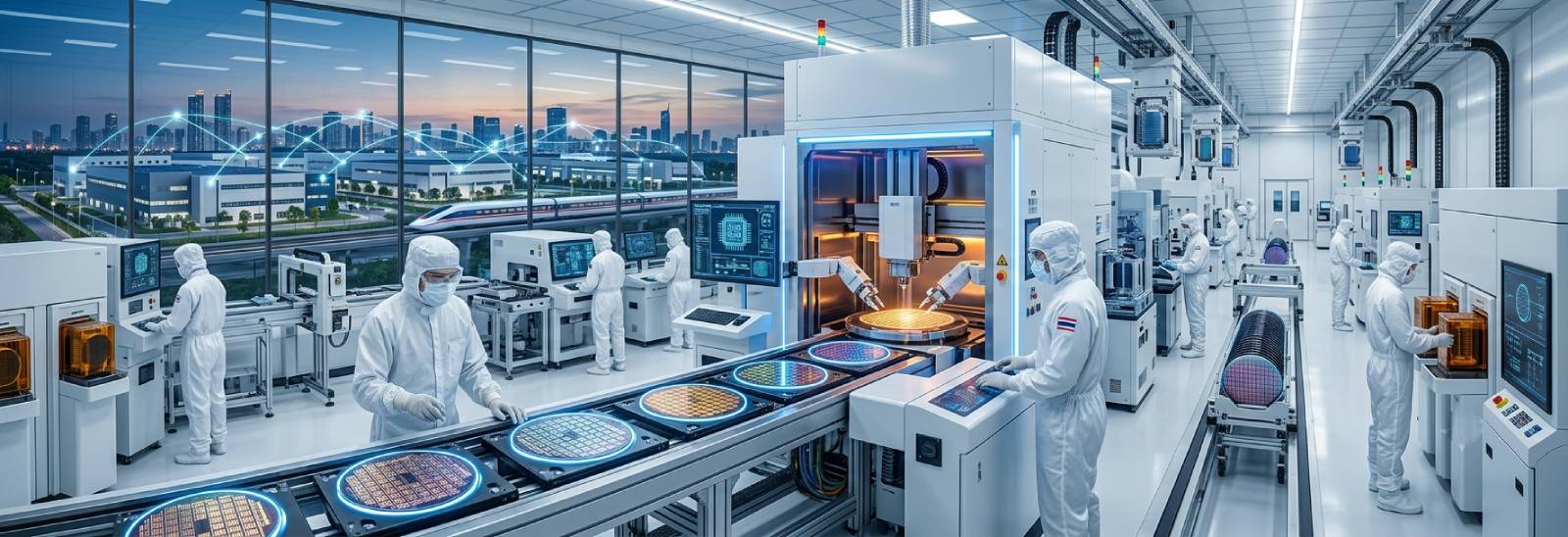
Thailand’s Board of Investment (BOI) is fundamentally reshaping the country’s electronics investment strategy. For more than two decades, Thailand positioned itself as a regional manufacturing hub for downstream electronics production, particularly in assembly, testing, and packaging (ATP) operations. However, recent policy direction shows a decisive transition toward attracting upstream semiconductor activities, especially wafer fabrication, integrated circuit (IC) design, advanced substrate technologies, and high-value microelectronics infrastructure.
This transition reflects a broader geopolitical and industrial reality. Global semiconductor supply chains are being restructured due to technological sovereignty concerns, U.S.-China technology fragmentation, and increasing demand for supply chain resilience across ASEAN. Thailand is now attempting to move beyond labor-cost competitiveness and establish itself as a strategic node within the global semiconductor ecosystem.
BOI’s Strategic Pivot Toward Front-End Semiconductor Manufacturing
Under updated BOI promotion policies for advanced electronics and smart industries, “Front-end” semiconductor manufacturing activities now receive substantially stronger support than conventional back-end operations. The policy distinction is highly significant.
Front-end semiconductor manufacturing refers to highly sophisticated processes such as wafer fabrication, photolithography, IC design, mask production, MEMS fabrication, and semiconductor-grade material engineering. These activities are technologically intensive, require ultra-clean production environments, and involve major capital expenditure commitments.
In contrast, Thailand’s historical strength has largely been concentrated in ATP activities — assembly, testing, and packaging — which, while still important, generate lower technological spillover and face increasing cost competition from neighboring jurisdictions.
The BOI’s updated framework indicates that Thailand no longer intends to compete solely as a low-cost electronics assembly destination. Instead, the government aims to position the country as part of the region’s advanced semiconductor infrastructure network alongside Singapore, Malaysia, Vietnam, and emerging investment corridors across ASEAN.
This policy shift aligns with Thailand’s broader industrial transformation agenda under advanced manufacturing and digital economy initiatives, particularly in sectors connected to electric vehicles, artificial intelligence infrastructure, smart devices, and industrial automation systems.
The Strategic Importance of Machinery Flexibility in Semiconductor Investment
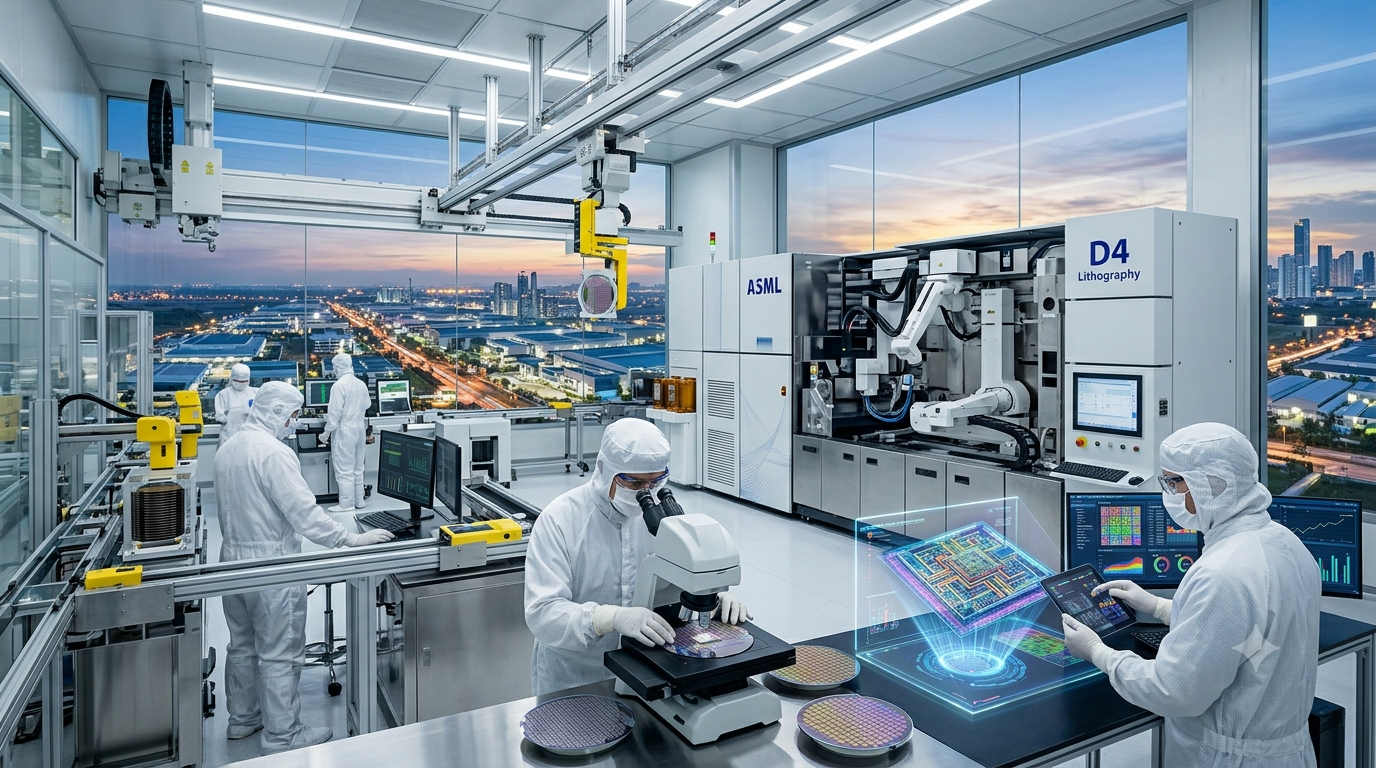
One of the most commercially significant changes introduced by the BOI is the new flexibility allowing semiconductor projects to count qualified used machinery — up to 10 years old — toward minimum investment requirements.
This provision may appear administrative on the surface, but it directly addresses one of the semiconductor industry’s most critical operational realities: capital intensity and equipment lifecycle management.
Semiconductor fabrication equipment is extraordinarily expensive. Advanced lithography systems, etching tools, deposition chambers, and wafer inspection platforms can individually cost tens or even hundreds of millions of dollars. Unlike conventional manufacturing sectors, semiconductor facilities often operate through phased technology migration cycles rather than complete equipment replacement.
In practice, many globally competitive semiconductor manufacturers intentionally redeploy mature-generation equipment across different jurisdictions depending on product specialization, yield optimization strategies, and regional manufacturing economics. Equipment that may no longer be suitable for cutting-edge 3nm or 5nm production can still remain commercially viable for automotive semiconductors, industrial chips, analog ICs, power management devices, and mature-node applications for many years.
By recognizing high-quality used machinery within BOI investment calculations, Thailand is effectively lowering barriers to entry for sophisticated semiconductor investors without diluting technological standards. This creates a more commercially realistic investment framework compared to rigid capital qualification rules commonly seen in emerging manufacturing jurisdictions.
The policy is particularly relevant for mature-node semiconductor expansion, where global demand remains structurally strong due to automotive electrification, industrial automation, medical electronics, and IoT device growth.
Thailand’s Competitive Position Within ASEAN’s Semiconductor Race
Thailand’s semiconductor policy evolution must also be viewed within the broader context of intensifying ASEAN competition for electronics and chip investments.
Malaysia continues to dominate regional ATP operations and semiconductor backend services. Singapore remains ASEAN’s leading high-end semiconductor and wafer fabrication hub due to its deep R&D ecosystem and highly developed infrastructure. Vietnam has rapidly emerged as a major electronics manufacturing destination driven by aggressive foreign direct investment inflows.
Thailand’s comparative advantage lies elsewhere.
The country possesses one of ASEAN’s strongest automotive manufacturing ecosystems, an increasingly sophisticated electronics supply chain, strong industrial estate infrastructure, and growing demand for semiconductor integration within EV production, smart appliances, robotics, and automation technologies.
The BOI’s front-end prioritization strategy appears designed to leverage these existing industrial strengths while attracting higher-value technological capabilities that can integrate directly into Thailand’s next-generation manufacturing base.
Importantly, semiconductor investors increasingly evaluate jurisdictions not only based on tax incentives, but also on energy reliability, geopolitical neutrality, engineering talent availability, water security, digital infrastructure, and long-term industrial policy consistency. Thailand’s challenge will therefore extend beyond incentives into broader ecosystem development.
From Electronics Assembly to Technology Sovereignty

The deeper significance of Thailand’s semiconductor strategy is not merely economic — it is geopolitical and structural.
Semiconductors are now viewed globally as strategic infrastructure rather than ordinary industrial products. Governments worldwide are redesigning industrial policies around technological resilience, domestic manufacturing capability, and supply chain security.
Thailand’s updated BOI framework signals recognition that long-term industrial competitiveness will increasingly depend on participation in higher-value technological layers rather than remaining concentrated in downstream assembly activities.
The inclusion of machinery flexibility provisions further demonstrates that Thai policymakers understand the operational economics of semiconductor manufacturing at a sophisticated level. Instead of pursuing symbolic “high-tech” positioning alone, the BOI appears to be building a more practical investment environment tailored to the realities of global chip production economics.
For multinational semiconductor companies evaluating ASEAN expansion strategies, Thailand is positioning itself not simply as another low-cost production base, but as a transitional platform capable of supporting more advanced and strategically significant manufacturing activities in the years ahead.
