

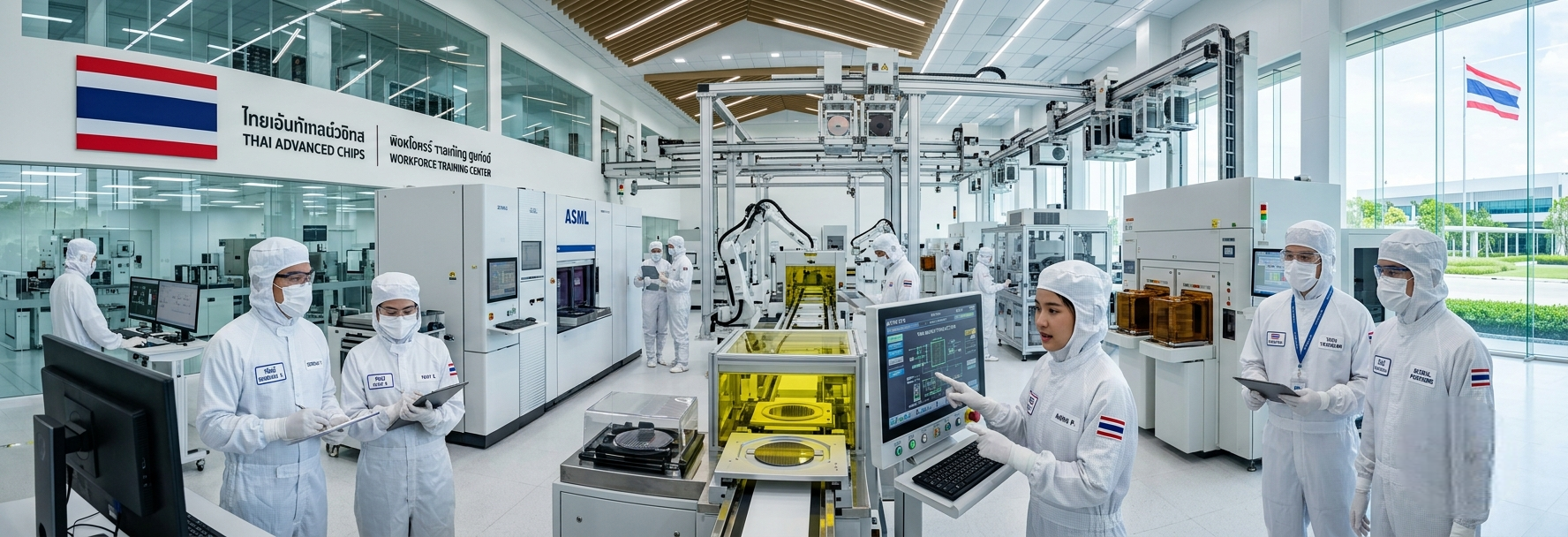
Thailand’s industrial policy is undergoing a significant transformation in 2026. For decades, the country’s investment promotion framework largely prioritized foreign direct investment, export generation, and manufacturing expansion. Today, however, regulators are demanding something far more substantial: measurable domestic economic participation.
Under the latest policy direction, newly promoted manufacturing companies employing more than 100 workers must ensure that at least 70% of their workforce consists of Thai nationals. The requirement represents one of the clearest signals yet that Thailand is redefining the relationship between investment incentives and local economic contribution.
The objective is no longer simply to attract factories into industrial estates. Authorities now expect promoted projects to actively strengthen Thailand’s labor market, technical capabilities, and long-term industrial competitiveness.
This policy evolution arrives at a critical moment as multinational corporations accelerate supply chain diversification across Southeast Asia. While Thailand continues positioning itself as a strategic manufacturing hub for advanced industries, the government is simultaneously reinforcing the principle that foreign investment must produce deeper domestic value creation.
The Government’s Response to the Rise of “Ghost Factories”
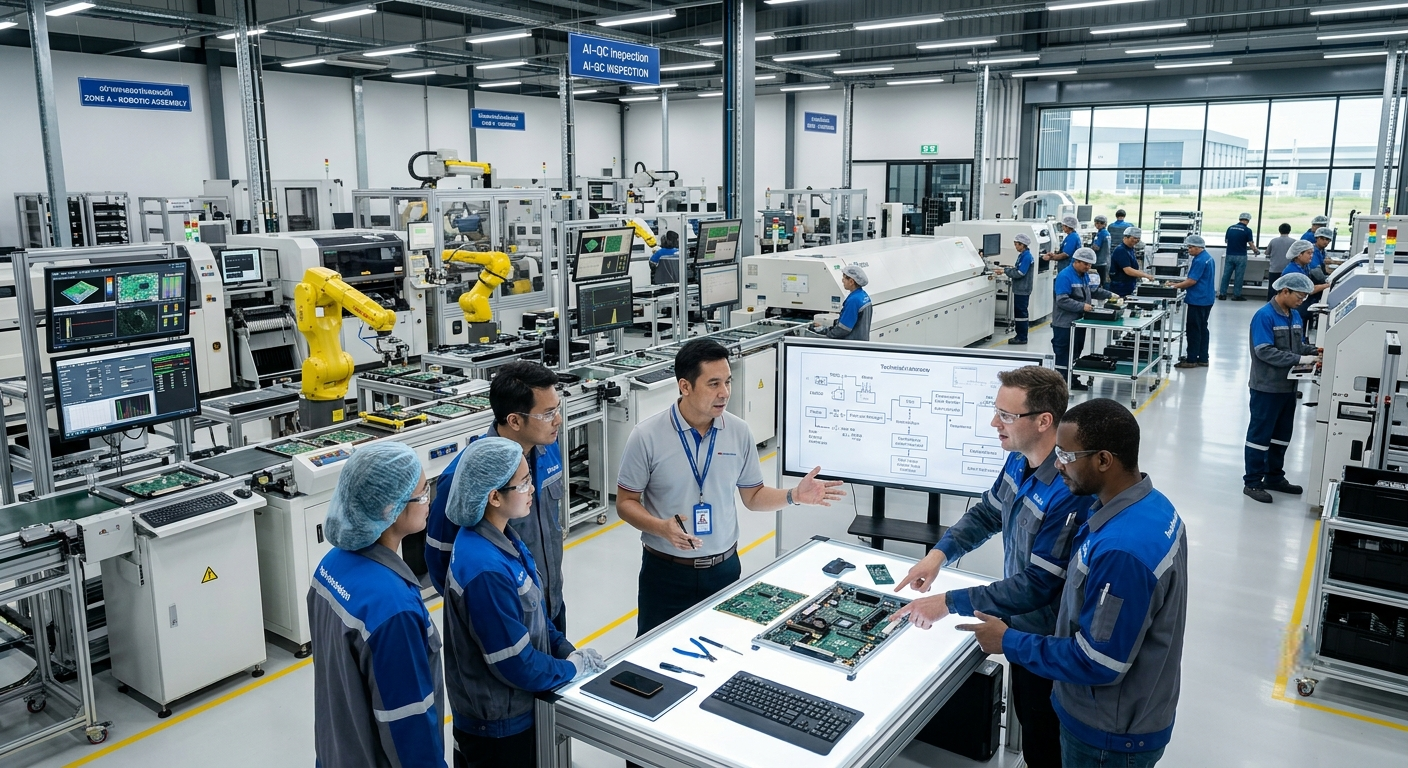
The new workforce quota is widely viewed as a direct response to concerns surrounding highly automated manufacturing facilities operating with minimal local integration.
In recent years, policymakers have become increasingly cautious of projects that secure extensive tax privileges and investment incentives while contributing limited opportunities for Thai nationals. Some facilities, particularly within labor-intensive sectors, have relied heavily on imported labor structures, creating growing concerns about uneven economic distribution and weak technology transfer into the domestic workforce.
Internally, regulators have increasingly characterized such operations as “ghost factories” — industrial facilities that generate production output without creating meaningful participation within the local economy.
The 70% Thai workforce requirement is therefore designed to achieve several strategic objectives simultaneously. It seeks to ensure that industrial growth translates into genuine employment generation, reduce structural dependence on foreign labor, and accelerate the transfer of technical expertise to Thai engineers, technicians, and skilled workers.
More importantly, the measure reflects a broader political and economic balancing strategy. Thailand remains highly open to foreign investment, particularly in sectors such as semiconductors, electric vehicles, smart electronics, and advanced manufacturing. However, the government is making it increasingly clear that future investment privileges will be tied not only to financial commitments, but also to demonstrable national economic benefits.
A New Compliance Landscape for Multinational Manufacturers
For foreign investors, the implications extend well beyond conventional labor management. The new quota introduces a deeper layer of operational, compliance, and strategic planning considerations.
Industries such as precision electronics, automotive manufacturing, EV supply chains, and semiconductor production frequently depend on expatriate specialists during initial deployment phases. Under the emerging framework, companies will need to develop structured localization strategies far earlier in the investment cycle.
This includes comprehensive workforce transition planning, internal technical training systems, and long-term talent development pipelines capable of gradually transferring operational expertise to Thai personnel.
Regulators are also expected to place greater emphasis on evidence-based technology transfer. Companies may increasingly be required to demonstrate how knowledge, technical capabilities, and industrial expertise are being embedded into the local workforce rather than remaining concentrated within foreign management structures.
At the same time, compliance exposure is likely to intensify. Labor ratios could become integrated into ongoing BOI monitoring and post-promotion audits, creating potential regulatory risks for companies unable to maintain the required threshold. In severe cases, non-compliance may affect tax privileges, promotional benefits, or eligibility for future investment incentives.
As a result, workforce localization is rapidly evolving from an HR matter into a core governance and investment-risk issue.
The Future of Investment Incentives Will Depend on Local Value Creation

Thailand’s new labor policy reflects a much broader shift in global industrial strategy. Across Asia, governments are increasingly reassessing how foreign investment contributes to employment resilience, domestic capability building, and economic sovereignty.
Thailand is not retreating from globalization. On the contrary, the country continues aggressively competing for high-value manufacturing investment. However, the investment environment is becoming increasingly conditional. Incentives are now more closely linked to the quality of domestic integration rather than the scale of capital expenditure alone.
For sophisticated multinational investors, this marks an important strategic transition. Long-term success in Thailand will depend not only on manufacturing efficiency and supply chain positioning, but also on the ability to establish credible local integration models.
Companies that invest early in Thai workforce development, vocational partnerships, engineering training, and institutional collaboration are likely to secure stronger regulatory confidence and greater long-term operational stability.
In the next phase of Southeast Asia’s industrial transformation, localization is no longer a secondary consideration. It is becoming a defining benchmark of investment legitimacy itself.
