


Closing a business is sometimes a strategic decision for companies that have completed their objectives, ceased operations, or need to restructure their activities. In Thailand, dissolving a company requires following specific legal procedures set out under the Thai Civil and Commercial Code and regulations administered by the Department of Business Development (DBD). Understanding the process helps ensure that the company is closed legally and avoids future liabilities.
This article provides an overview of the key steps and compliance requirements for company dissolution in Thailand.
What is Company Dissolution?
Company dissolution refers to the legal process of closing a company and terminating its legal existence. Once a company is dissolved, it must undergo liquidation to settle its affairs, pay outstanding debts, distribute remaining assets to shareholders, and formally remove the company from the business registry.
Companies may dissolve voluntarily through a shareholders’ resolution or involuntarily through court order or regulatory action.
Key Steps in the Company Dissolution Process
Shareholders’ Resolution to Dissolve the Company
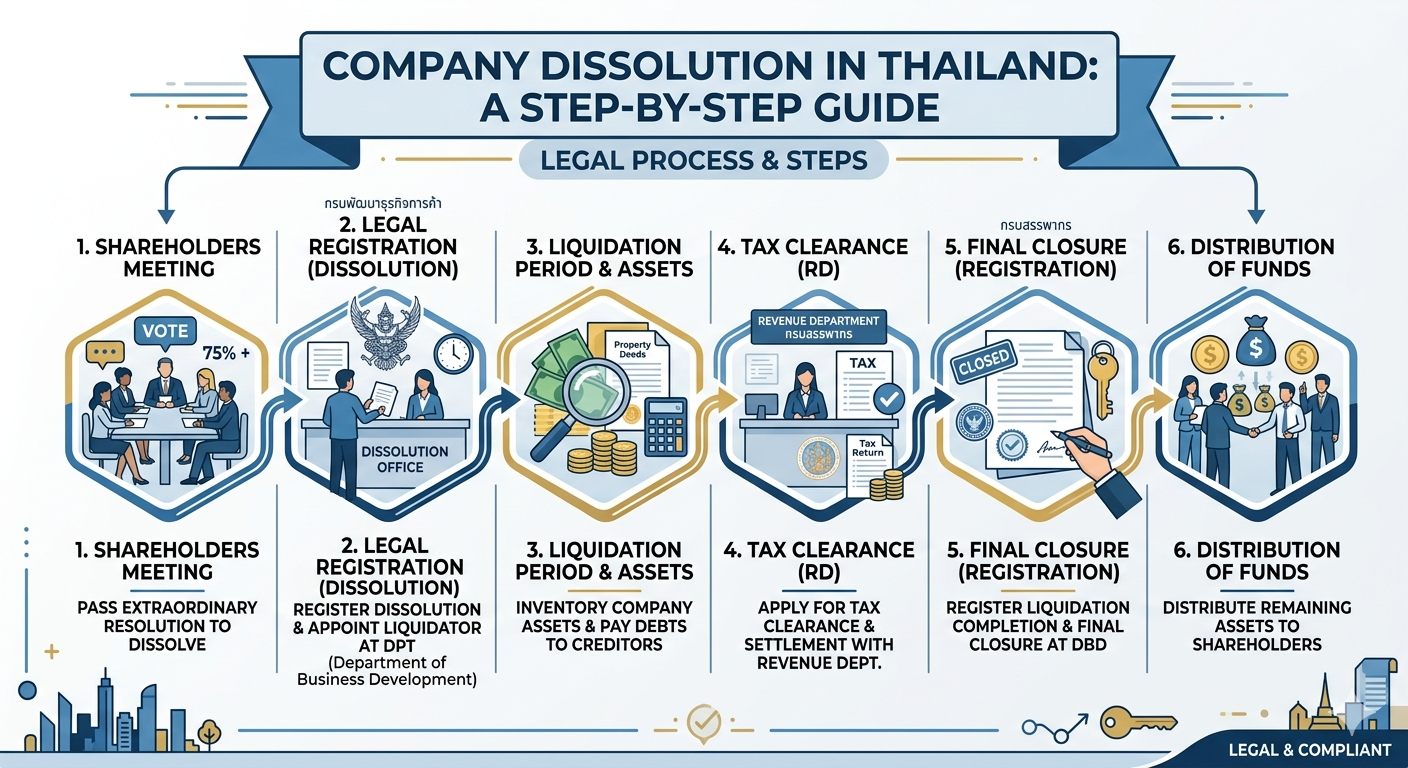
The first step in dissolving a company in Thailand is obtaining approval from the shareholders. An Extraordinary General Meeting (EGM) must be held where shareholders vote on the dissolution of the company.
A special resolution requiring at least 75% of shareholder votes must be passed to approve the dissolution. Notice of the meeting must be sent to shareholders at least 14 days before the meeting and usually published in a local newspaper.
During this meeting, the shareholders also appoint a liquidator who will oversee the winding-up process.
Registration of Dissolution with the Department of Business Development (DBD)
Once the resolution is passed, the company must register the dissolution with the Department of Business Development within 14 days. This registration includes submitting the meeting minutes, dissolution resolution, and details of the appointed liquidator.
After the registration, the company officially enters the liquidation phase.
Notification to Creditors and Public Announcement
The liquidator must notify creditors about the dissolution. This is typically done through:
- Publishing a notice in a local newspaper
- Sending registered letters to creditors
These notifications allow creditors to submit claims against the company within a specified period.
Liquidation of Assets and Settlement of Liabilities
During the liquidation process, the liquidator is responsible for managing the company’s affairs. Key responsibilities include:
- Selling company assets
- Settling debts and liabilities
- Paying outstanding taxes
- Handling legal obligations
If the company still has remaining assets after settling all debts, the liquidator distributes them to shareholders according to their shareholding.
The liquidator must also submit progress reports to the authorities periodically during the liquidation period.
Tax Clearance and Government Notifications
Before finalizing the dissolution, the company must clear all tax obligations with the Revenue Department. This includes:
- Filing the final corporate income tax return
- Submitting audited financial statements
- Deregistering VAT (if applicable)
- Returning tax identification documents
The final corporate tax return must generally be filed within 150 days after the dissolution registration.
Additionally, the company must notify the Social Security Office and cancel any relevant business licenses.
Final Liquidation and Removal from the Business Register
Once all liabilities are settled and the liquidation process is completed, the liquidator prepares final accounts and presents them to the shareholders for approval.
The final liquidation must then be registered with the Department of Business Development within 14 days. After this registration, the company’s legal existence officially ends.
Timeframe for Company Dissolution
The dissolution process in Thailand generally takes 3 to 6 months, depending on the complexity of the company’s finances, tax clearance procedures, and settlement of liabilities.
Important Considerations
Businesses planning to dissolve should also consider the following:
- Employee termination obligations: Employees must receive statutory severance payments according to Thai labor law.
- Document retention: Company records must typically be kept for 10 years after the liquidation is completed.
- Regulatory compliance: All business licenses, work permits, and registrations must be cancelled before final dissolution.
Dissolving a company in Thailand involves more than simply ceasing operations. Businesses must comply with legal procedures, settle financial obligations, and complete government filings to ensure the company is properly closed.
By carefully following the dissolution and liquidation process, business owners can avoid future legal or tax complications while ensuring a smooth exit from the Thai market.
