


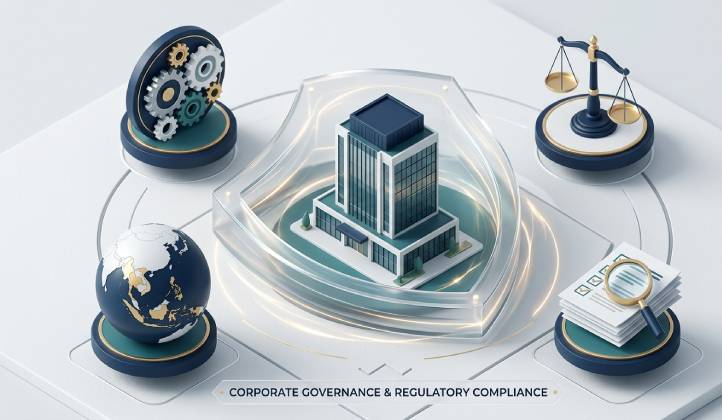
In today’s increasingly complex regulatory environment, corporate governance and regulatory compliance are no longer optional frameworks — they are strategic imperatives. For businesses operating in dynamic markets such as Thailand and across ASEAN, strong governance structures and proactive compliance management are critical to building trust, reducing risk, and ensuring long-term sustainability.
As regulatory scrutiny intensifies and stakeholders demand greater transparency, organizations that prioritize governance and compliance position themselves for stable and scalable growth.
What Is Corporate Governance?
Corporate governance refers to the system of rules, practices, and processes by which a company is directed and controlled. It defines the roles and responsibilities of:
- Shareholders
- The Board of Directors
- Executive management
- Key stakeholders
Effective governance ensures:
- Transparency in decision-making
- Accountability at all leadership levels
- Fair treatment of shareholders
- Ethical business conduct
Strong governance frameworks also enhance investor confidence — particularly for companies seeking expansion, foreign investment, or cross-border operations.
Regulatory Compliance: More Than Just Following Rules
Regulatory compliance involves adhering to applicable laws, regulations, and industry standards. These may include:
- Corporate and commercial laws
- Tax regulations
- Labor laws
- Data protection requirements
- Anti-money laundering (AML) policies
- Industry-specific regulations
In jurisdictions such as Thailand, companies must comply with regulations issued by authorities such as the Department of Business Development, the Revenue Department, and the Securities and Exchange Commission (for regulated entities).
Non-compliance can result in financial penalties, reputational damage, operational disruption, and even criminal liability for directors.
Why Corporate Governance & Compliance Matter More Than Ever
Risk Mitigation
Robust governance structures reduce the likelihood of fraud, misconduct, and regulatory violations. Internal controls and regular audits help detect risks early.
Investor & Stakeholder Confidence
Institutional investors and foreign partners increasingly assess Environmental, Social, and Governance (ESG) standards before committing capital.
Business Sustainability
Companies with strong governance practices demonstrate resilience during economic downturns and regulatory changes.
Competitive Advantage
In competitive markets, regulatory compliance builds credibility with banks, partners, and multinational clients.
Key Elements of an Effective Governance & Compliance Framework
To establish strong corporate governance and compliance practices, organizations should focus on:
Clear Organizational Structure
Define roles, reporting lines, and accountability mechanisms.
Strong Board Oversight
An active and independent board ensures strategic direction and ethical management.
Internal Controls & Audit Functions
Regular compliance reviews and financial audits reduce exposure to legal risks.
Policies & Code of Conduct
Documented policies on anti-corruption, whistleblowing, and data protection are essential.
Ongoing Compliance Monitoring
As regulations evolve, compliance systems must evolve accordingly.
Governance in the ASEAN Context
Across ASEAN, governments are strengthening regulatory frameworks to attract foreign direct investment. Countries like Singapore and Malaysia have long-established corporate governance standards, while Thailand continues to enhance transparency and regulatory enforcement to align with global best practices.
For companies expanding regionally, harmonizing governance standards across jurisdictions is crucial.
Practical Steps for Businesses
To strengthen governance and compliance, companies should:
- Conduct periodic compliance risk assessments
- Engage qualified legal and tax advisors
- Implement digital compliance management systems
- Provide regular training for directors and employees
- Establish whistleblowing mechanisms
Governance should not be treated as a reactive function; it must be embedded into corporate culture.
Corporate governance and regulatory compliance are foundational pillars of responsible business. They protect companies from legal exposure, enhance reputation, and support sustainable growth.
In fast-growing economies like Thailand and the broader ASEAN region, businesses that proactively strengthen governance frameworks are better positioned to attract investors, secure partnerships, and navigate regulatory complexity with confidence.
In an era where transparency and accountability define corporate success, governance is no longer just a compliance requirement — it is a strategic advantage.
