

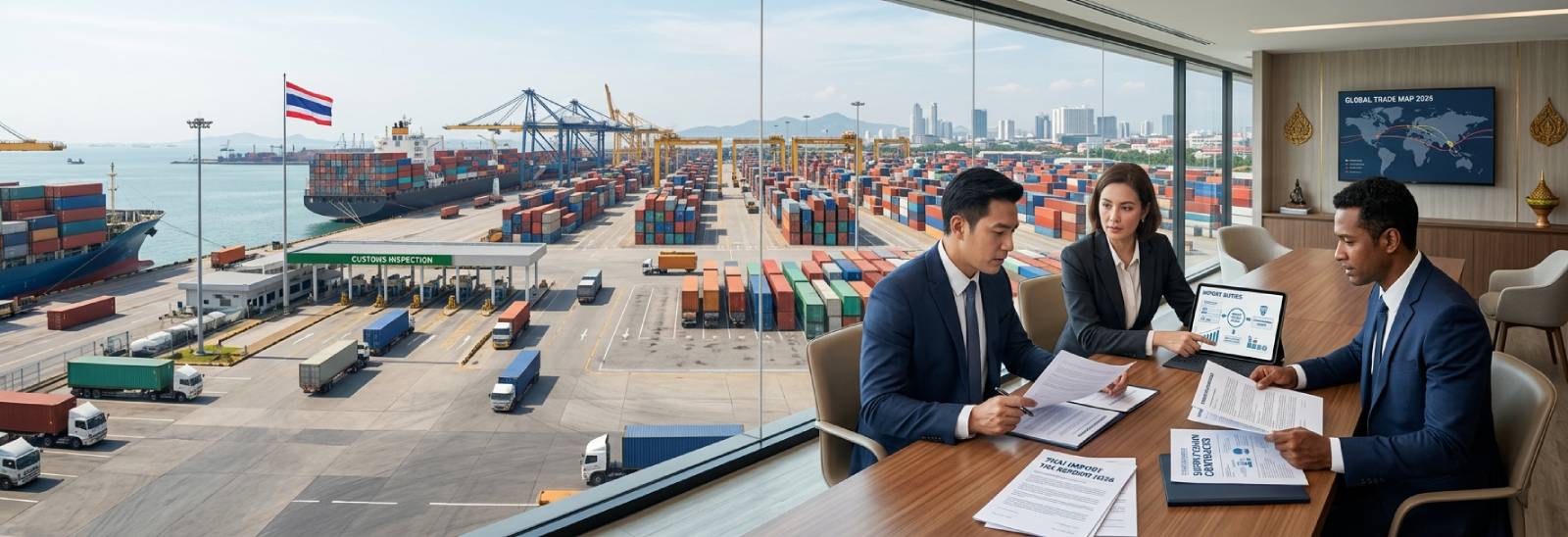
Effective 1 January 2026, Thailand abolished the customs duty exemption previously available for imported goods with a value not exceeding THB 1,500. As a result, virtually all imported products entering Thailand are now subject to VAT and, where applicable, import duties.
While the policy was primarily introduced to create a level playing field between domestic and foreign sellers and to strengthen tax collection, its implications extend far beyond customs compliance. The reform effectively reallocates tax costs and importation risks throughout the supply chain, particularly for businesses operating under e-commerce, drop-shipping, direct-to-consumer, and regional distribution models.
Many commercial arrangements were drafted under the assumption that low-value shipments could enter Thailand without triggering significant customs liabilities. That assumption is no longer valid. Businesses that fail to revisit their contractual framework may find themselves exposed to unexpected tax costs, customs disputes, and commercial conflicts.
Why Existing Supply Chain Agreements May No Longer Allocate Risk Properly

One of the most significant legal consequences of the reform is that contractual risk allocation may no longer reflect the actual economic burden arising at importation.
In many cross-border transactions, contracts merely state that goods will be delivered to Thailand without clearly identifying which party is responsible for import duties, VAT, customs clearance procedures, or post-import tax assessments. Historically, such ambiguities often remained unnoticed because low-value shipments frequently benefited from the exemption threshold.
From 2026 onward, however, every shipment potentially creates a tax event. Where contractual provisions are silent or unclear, customs authorities may collect taxes from the importer of record, logistics provider, local distributor, or another party involved in the import process. The commercial contract may not adequately protect that party from bearing costs that were never intended to be assumed.
Consequently, agreements drafted before the reform may no longer provide sufficient protection against tax leakage and should be reviewed in light of the new customs environment.
Incoterms Alone Are No Longer Sufficient
Many businesses assume that selecting an Incoterm automatically determines all tax responsibilities. In practice, this assumption can create significant legal and commercial risks.
Although Incoterms establish the allocation of transportation costs, delivery obligations, and certain customs responsibilities, they do not comprehensively address all tax exposures that may arise under local law. Import VAT, customs reassessments, penalties, interest, indirect tax adjustments, and regulatory compliance obligations frequently fall outside the scope of standard Incoterm provisions.
For example, under Delivered Duty Paid (DDP) arrangements, foreign suppliers may inadvertently assume broader tax obligations than anticipated. Conversely, under Ex Works (EXW), Free Carrier (FCA), or Delivered at Place (DAP) structures, local distributors may become responsible for import taxes that were not factored into pricing negotiations.
As a result, businesses should avoid relying solely on Incoterms and instead incorporate detailed contractual provisions that expressly allocate responsibility for VAT, import duties, customs declarations, tax audits, reassessments, penalties, and related compliance costs.
Contract Reengineering Becomes a Strategic Priority

The 2026 reform should be viewed not merely as a customs issue but as a supply chain governance issue requiring coordinated action between legal, tax, procurement, and commercial teams.
Companies engaged in cross-border trade should review distribution agreements, supply agreements, logistics contracts, marketplace arrangements, and drop-shipping structures to ensure that tax liabilities are clearly assigned and commercially sustainable. Particular attention should be given to tax indemnity provisions, pricing adjustment mechanisms, customs cooperation clauses, and documentation requirements.
Businesses should also evaluate whether existing operating models remain efficient from both a tax and commercial perspective. In some cases, restructuring the supply chain, appointing a different importer of record, or modifying distribution channels may significantly reduce compliance risks and improve cost predictability.
As Thailand strengthens its taxation of imported goods, contractual certainty becomes increasingly important. Organizations that proactively reallocate tax responsibilities through carefully drafted agreements will be better positioned to avoid disputes, preserve margins, and maintain supply chain resilience in an evolving regulatory environment.
Thailand's abolition of the THB 1,500 import exemption marks a significant development in the country's tax and customs framework. The reform transforms what was previously a limited compliance issue into a broader commercial and contractual concern affecting businesses throughout the supply chain.
For companies involved in international trade, the key question is no longer whether import taxes apply, but rather which party ultimately bears the economic and legal responsibility for those taxes. Ensuring that contracts clearly address this issue will be essential to managing risk and protecting commercial interests in Thailand's new cross-border trading environment.
